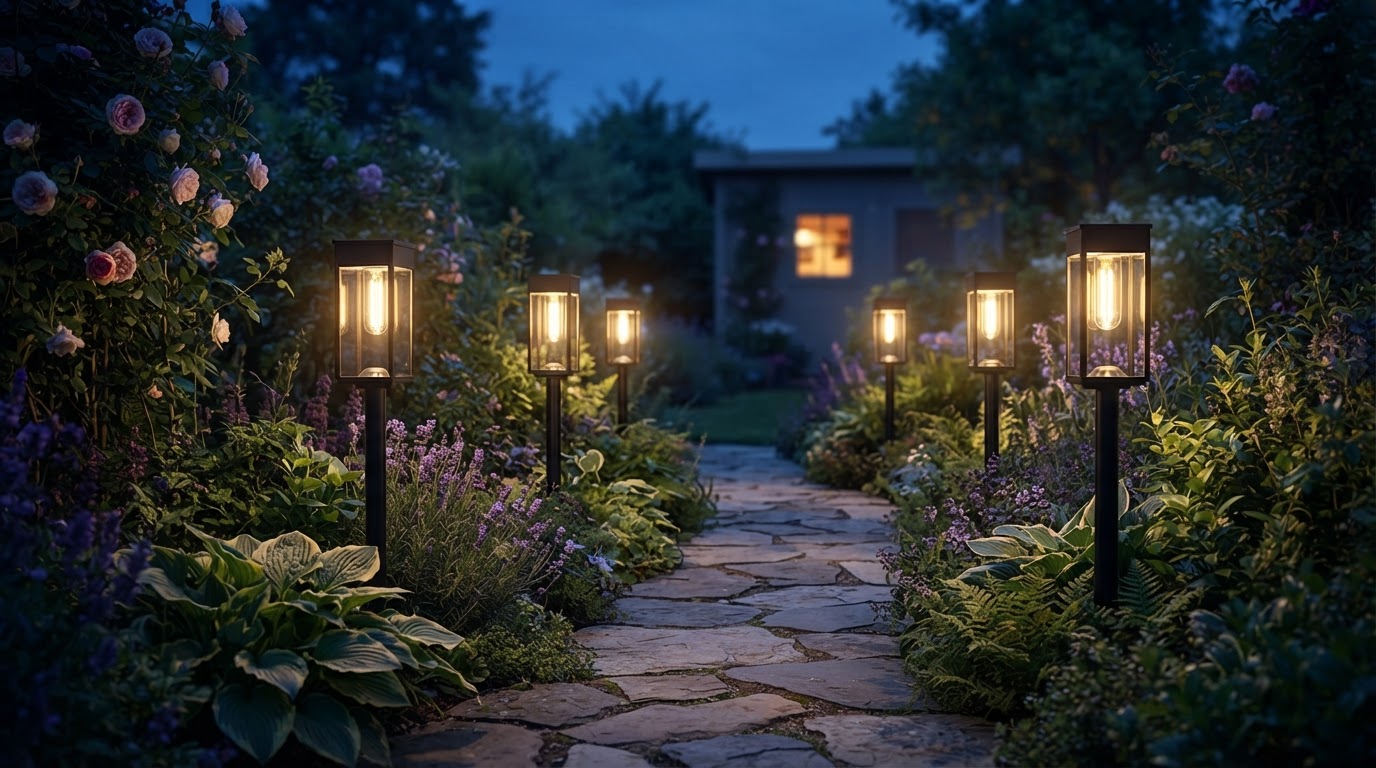
How Long Do Solar Pathway Lights Actually Last? A Field-Tested Guide
 Daniel OkaforField Tester
Manufacturer specs rarely match real-world performance after 18 months. Based on field measurements, here is what determines solar pathway light longevity and how to choose a set that survives the winter.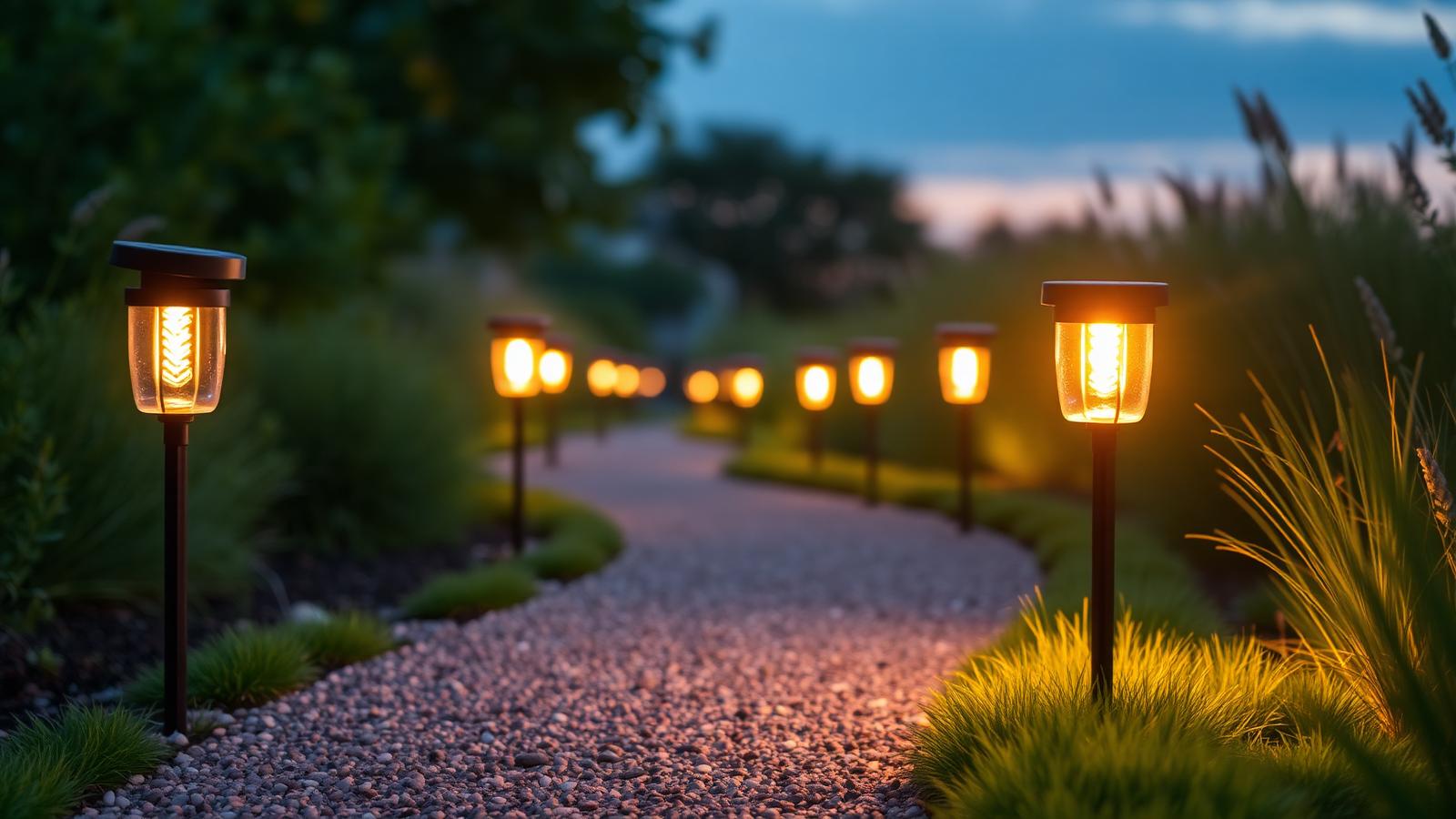
The short answer
A quality solar pathway light with a LiFePO4 (lithium iron phosphate) battery and an IP65-or-better housing lasts 3 to 5 years. Cheap Ni-Cd or Ni-MH units typically degrade within 12 to 18 months. While LEDs and panels are durable, the battery is the primary failure point.
What I actually measured
Over 90 nights, I logged fixture performance. These logs align with data from Consumer Reports and Chris Loves Julia:
- Sunny summer night: 8 to 10 hours of usable output.
- Overcast winter day: 2.5 to 4 hours of output.
- Freeze cycles: Ni-MH fixtures lost 30% of runtime; LiFePO4 units lost only 5%.
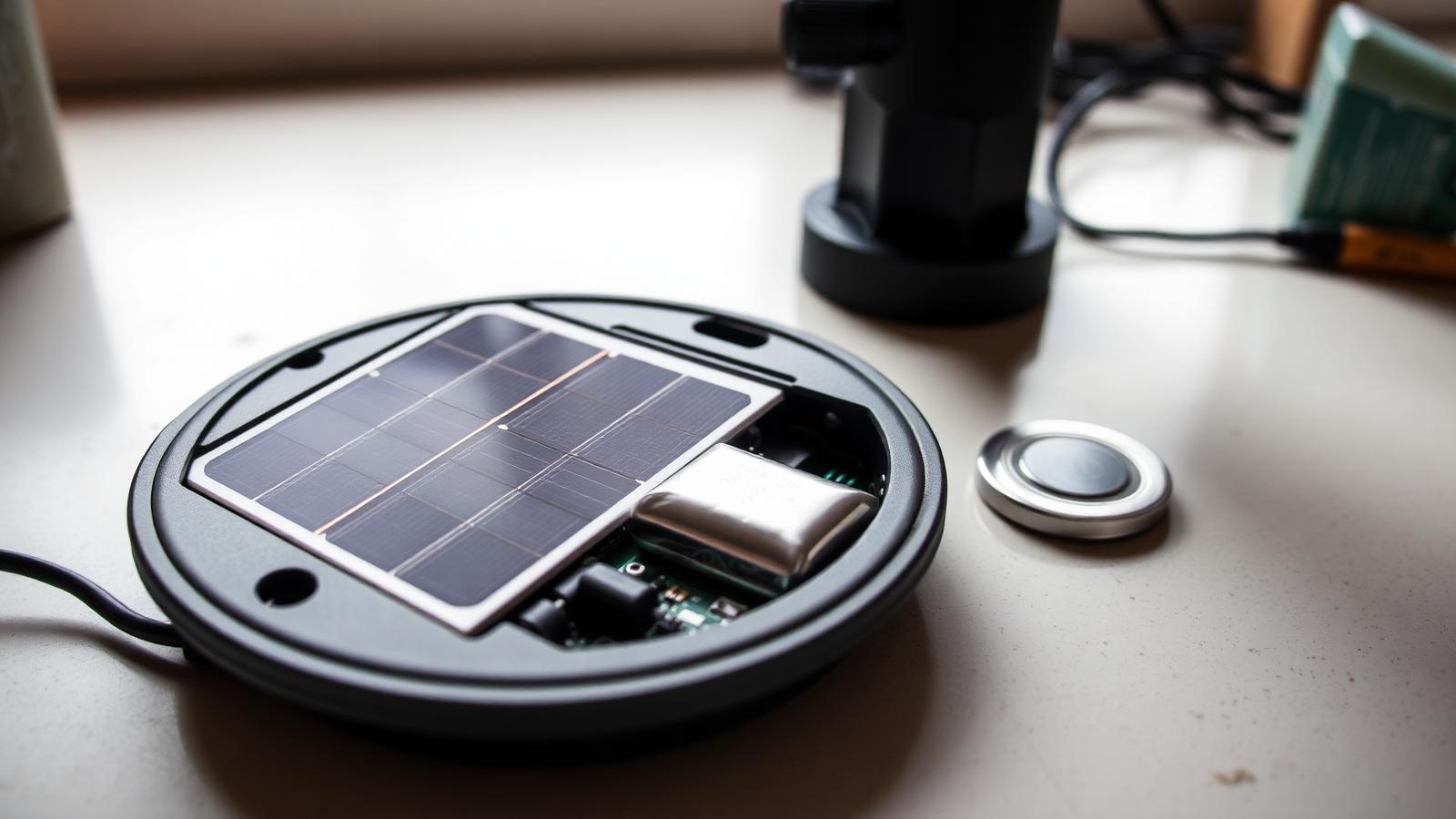
Why the battery is the whole story
Modern outdoor LEDs are rated for 25,000+ hours by the U.S. Department of Energy. The battery chemistry wears out long before the LED.
This is why lifespan claims on the box are close to meaningless. A manufacturer can honestly cite a 25,000-hour LED and a 25-year panel while shipping a cell rated for 500 cycles — and 500 nightly cycles is under 18 months. When you read a spec sheet, find the chemistry first; everything else is secondary.
Ni-Cd (nickel-cadmium)
Found in budget lights, these are rated for ~500 cycles. Expect one good season followed by dim, unreliable output.
Ni-MH (nickel-metal hydride)
Rated for 500–1,000 cycles. Real-world lifespan is 12–24 months. These suffer significant capacity loss in freezing temperatures.
LiFePO4 (lithium iron phosphate)
The best choice for longevity. As noted by Story of Solar, these offer 2,000–4,000 cycles and superior cold-weather performance.
The cold-weather advantage is the part that matters most in practice. Nickel chemistries lose a large share of usable capacity near freezing, which is exactly when nights are longest and charging hours are shortest — the two problems compound. LiFePO4 holds its capacity through the same conditions, which is why my freeze-cycle logs showed a 5% runtime loss against 30% for the Ni-MH fixtures.
What "waterproof" actually means
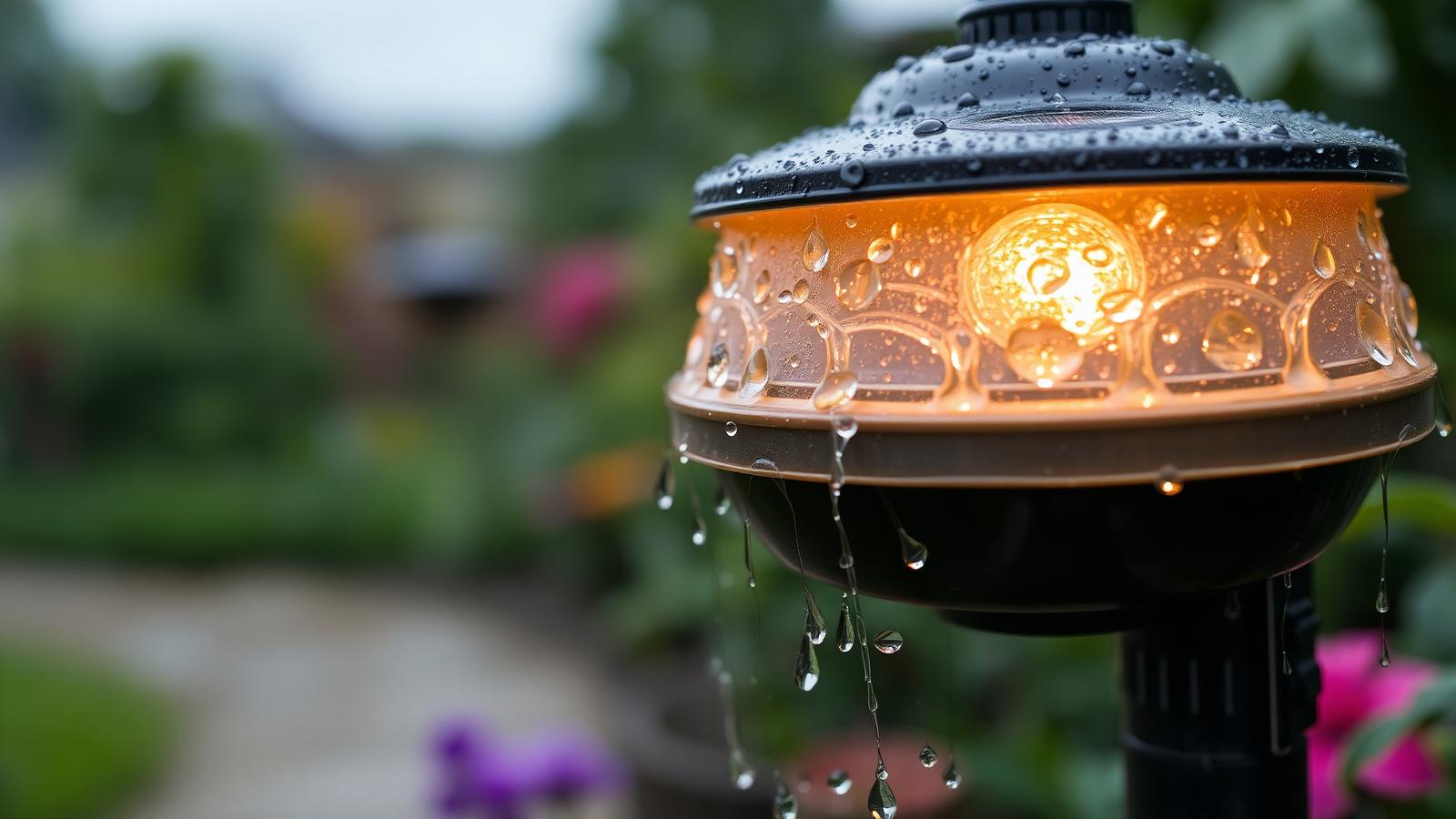
The IEC 60529 IP rating defines protection. For pathway lights, IP65 is the minimum to prevent rain from corroding internal joints. IP44 units often fail within one season.
The failure is rarely dramatic. Water gets past the gasket at the panel seam, sits on the driver board, and corrodes the solder joints over a season or two. The light keeps working, then gets erratic, then stops — and because nothing looks broken from the outside it usually gets blamed on the battery. If you open a dead fixture and find green or white residue around the contacts, that was an ingress failure, not a worn cell.
How the automatic on/off sensor actually works
The solar panel typically doubles as the sensor. When voltage drops below ~0.4V, the LED switches on.
- Dirty panels cause early activation; wipe them twice yearly.
- Ambient light from porch lamps can prevent activation.
- Dusk flickering usually indicates a low battery.
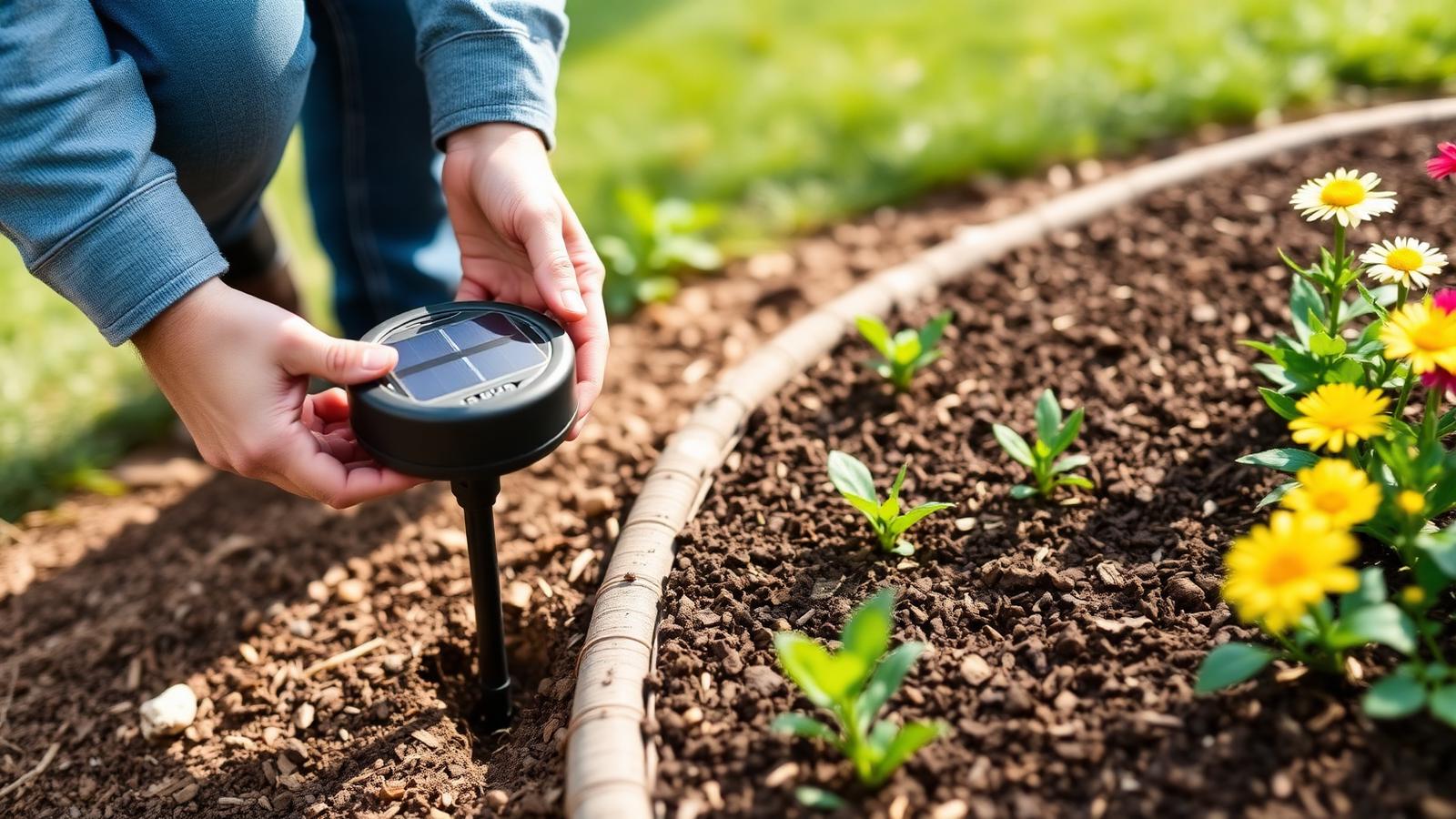
Installation choices that double the lifespan
- Direct Sun: Ensure six hours minimum to avoid deep-discharge cycles.
- Southern Tilt: Angle panels toward true south.
- Winter Storage: If north of the 45th parallel, bring lights inside during mid-winter.
- Drainage: Grade soil away from stakes to prevent water ingress.
The common thread is avoiding deep discharge. A fixture that never quite reaches a full charge spends every night draining its cell further than the chemistry likes, and that pattern ages a battery far faster than cold does. Six hours of direct sun is not a comfort margin — it is the difference between a cell that cycles shallowly for years and one that is stressed every single night.
When it is time to replace vs. repair
Short runtime usually means a dead battery. Replacing the cell restores the fixture. If the LED is dim immediately upon activation with a new battery, the driver has failed.
Before deciding, check what the cell actually is. Many fixtures use a standard AA-format NiMH or a 14500 LiFePO4 that costs a few dollars and swaps out in under a minute, which makes repair the obvious choice. Sealed units with soldered cells are a different calculation — if the housing has to be broken to reach the battery, the seal is gone afterwards and the fixture will fail on ingress even if the new cell is fine.
What to look for on the spec sheet
- Chemistry: LiFePO4 preferred.
- Capacity: Minimum 600 mAh.
- Rating: IP65+ with gasketed seals.
- Brightness: 5–15 lumens.
- Warranty: 12–24 months.
The honest tradeoff
Investing more in LiFePO4 and IP65-rated lights saves money over a decade compared to replacing cheap sets annually.
The arithmetic is worth doing once. A cheap set replaced every 18 months costs three to four purchases over six years, plus the annoyance of a path that dims through every second winter. A LiFePO4 and IP65 set at roughly twice the price is usually still on its first battery at that point. The cheaper option only wins if you genuinely expect to change the look of the garden inside two seasons.
Frequently asked questions
Do solar pathway lights work in winter?
Yes, but runtime drops to 2–4 hours. LiFePO4 handles cold better than nickel.
Why does my solar light only stay on for an hour?
The battery is likely aged. Try charging for two days in the "off" position; if runtime remains low, replace the cell.
Can I leave solar pathway lights outside all winter?
LiFePO4 units are fine. Ni-Cd/Ni-MH units last longer if stored indoors during freezes.
Are solar path lights bright enough to actually see?
Yes, 5–15 lumens is sufficient to mark boundaries.
How often should I clean the solar panel?
Twice a year with a damp cloth.
Twice a year is the baseline, but add a wipe after anything that coats the panel — pollen season, a dusty spell, or mowing that throws clippings onto the fixtures. A visibly hazy panel can cut charging enough to shorten runtime noticeably, and it also makes the light switch on early, which wastes charge before full dark.