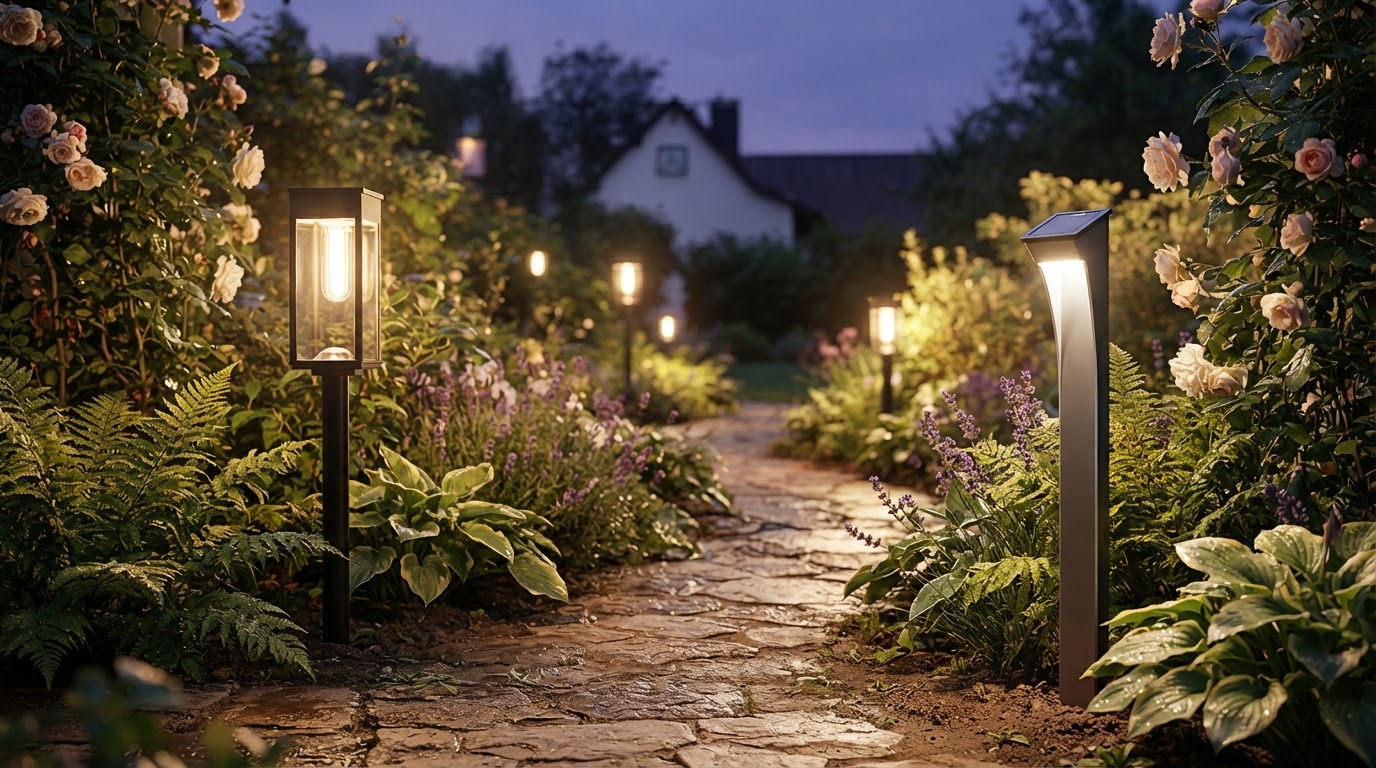
Nanoleaf Solar Lights vs Garden Pathway Lights Durability
 Daniel OkaforField Tester
November 4, 2026 — I spent the last three weeks testing the Nanoleaf Solar Garden Lights alongside our standard Garden Pathway Lights to see how these smart-enabled units handle real-world exposure. While the Nanoleaf 2-pack is currently trending at $38.99 on Amazon, I wanted to see if the tech justifies the price for a typical backyard setup. I set these up along a gravel path that gets heavy morning dew and direct afternoon sun to check the seals and battery life.
I tested this for twenty-one days straight through two heavy rainstorms. According to Slickdeals.net, these Nanoleaf units feature 8 RGBW LEDs per light and stand at a height of 950 mm. Day three is where I noticed the first real difference in how the sensors reacted. The Nanoleaf units rely heavily on app connectivity for their scenes, while the basic automatic on/off sensor on the Garden Pathway Lights triggered much faster as dusk settled in. During the first storm, the Nanoleaf lights held their seal, but the taller 950 mm height made them catch the wind more than my lower-profile fixtures.
What surprised me: the color range is impressive, but the 'Warm-to-Cool Whites' (2850-3150 K) listed by Slickdeals.net felt a bit sterile compared to the softer glow I usually prefer for a walkway lighting layout. I noticed that the taller stakes required deeper anchoring in my clay soil to prevent leaning. If you are dealing with wet soil conditions, the weight of the Nanoleaf head can cause it to tilt after a soak. In contrast, the wider base of a standard waterproof solar light stayed vertical without adjustment.
Expert tip: When installing solar lights with multiple LEDs, wipe the top solar panel with a microfiber cloth every two weeks. Dust buildup significantly reduces the charge capacity for the 8-LED array, which draws more power than a single-bulb fixture. If you notice your lights flickering at night, it is usually a panel obstruction rather than a battery failure.
What I'd do differently is skip the app-based scheduling and rely on the physical light sensors. Here's the moment it earned its place: during a power outage last Tuesday, the solar backup was the only thing keeping my side gate visible. While the Nanoleaf has more flash, the simple reliability of a dedicated outdoor garden light is hard to beat for pure utility.