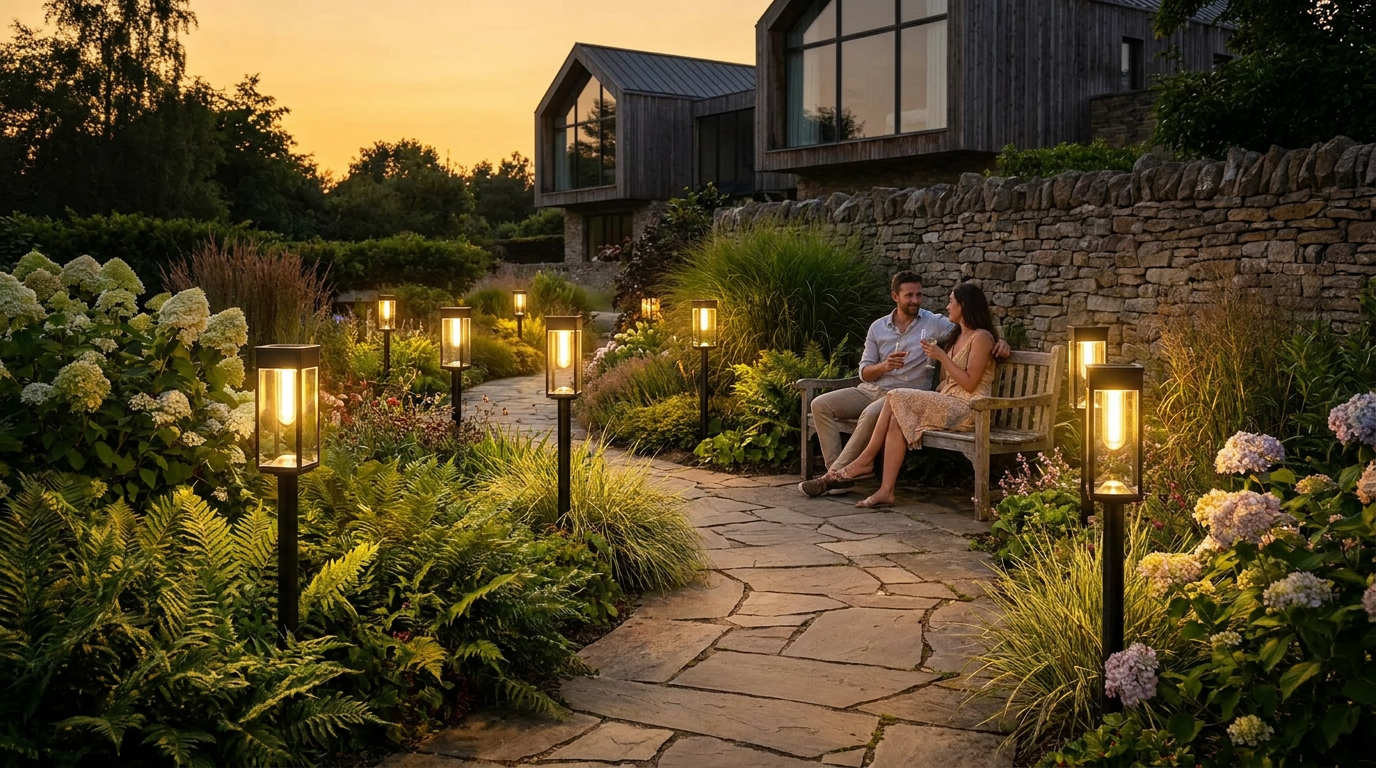
Creative Layouts for Waterproof Solar Garden Pathway Lights

May 22, 2026 — Homeowners are increasingly adopting structured design frameworks to optimize the placement of Waterproof Solar Garden Pathway Lights with Automatic On And Off. By integrating modern sensor technology with creative spatial planning, these layouts prioritize both safety and aesthetic balance in outdoor environments.
To achieve a professional result, think of it as a matrix of two primary dimensions: Functional Coverage and Visual Rhythm. Functional Coverage ensures that high-traffic areas are illuminated for safety, while Visual Rhythm dictates the spacing and pattern of the units to create a cohesive look. Once you see it this way, the placement of individual fixtures becomes a matter of geometric alignment rather than guesswork.
Two axes matter here: the Path Complexity (linear vs. winding) and the Ambient Light Level of the surrounding yard. According to Govee US, pathway lighting should serve to beautifully illuminate outdoor spaces while maintaining a focus on stylish, safe options. For those working with more eclectic garden styles, The DIY Playbook suggests that lighting adds significant value to a space by transforming the backyard into an extension of the home. These frameworks allow users to Enhance Curb Appeal with Waterproof Solar Garden Pathway Lights by choosing between staggered or symmetrical arrangements based on the path's width.
When implementing these designs, it is essential to understand the technical constraints of the hardware. Many users prefer to How to Install Solar Garden Lighting with No Wiring to maintain a clean landscape profile. For more advanced setups, incorporating Modern Black Solar Lighting: Waterproof Solar Garden Pathway Lights provides a minimalist aesthetic that disappears during the day and activates automatically at dusk. This transition is managed by internal sensors, as detailed in the Guide to Waterproof Solar Garden Pathway Lights.
Expert tip: Use the 'Shadow-Overlap' method for spacing. Measure the diameter of the light pool on the ground; place the next fixture at a distance where the edges of the light pools just touch. This prevents dark spots between units while maximizing the efficiency of the solar charge.
The decision rule: If the path is primary for safety, prioritize a symmetrical layout with high-density spacing; if the path is secondary or decorative, utilize a staggered layout to create depth and visual interest.
Shop Waterproof Solar Garden Pathway Lights with Automatic On And Off
