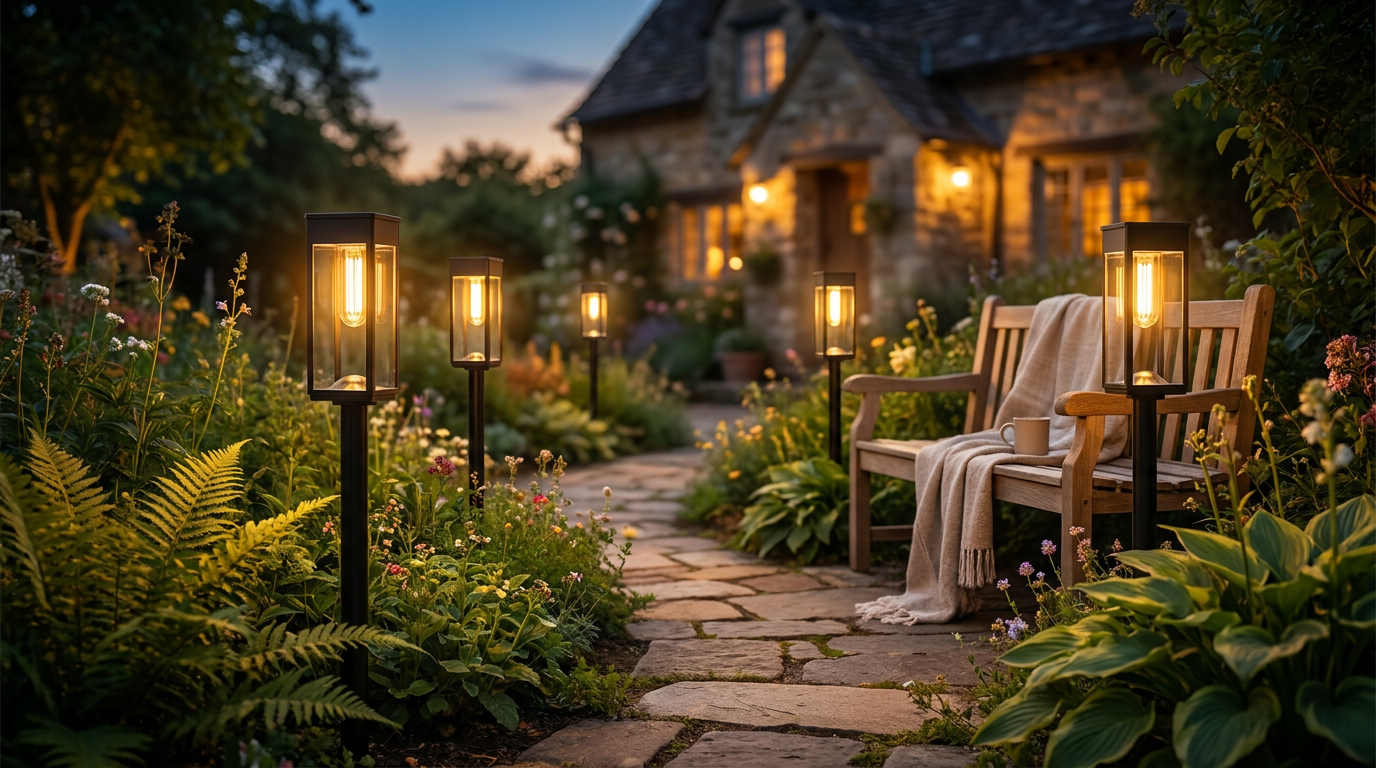
How Waterproof Solar Garden Pathway Lights with Automatic On And Off Work
Imagine your garden path, driveway, or flowerbeds glowing to life each evening without you lifting a finger. This effortless elegance and enhanced safety is the promise of automatic solar lighting. Our Waterproof Solar Garden Pathway Lights with Automatic On And Off are designed around this very principle, using smart sensor technology to provide reliable, hands-free illumination. Understanding how these sensors work is key to appreciating their efficiency and choosing the right setup for your outdoor space.
At the heart of these fixtures is a sophisticated system that balances energy collection, storage, and light output. By automating the entire process, these lights ensure your pathways are safely lit every night while maximizing the life of the internal battery. This post explores the smart technology that makes it all possible, from the primary dusk-to-dawn function to advanced motion detection.
How do dusk-to-dawn sensors trigger the lights?
The primary auto-trigger mechanism in most solar path lights is a photocell, also known as a light-dependent resistor (LDR). Think of this tiny component as the eye of the light fixture. Its job is to measure the amount of ambient light in the environment.
During the day, sunlight hits the solar panel. While the panel is busy converting this light into electrical energy to charge the internal battery, the photocell detects the bright conditions and keeps the light switched off. As the sun sets and daylight fades, the photocell registers the drop in light intensity. Once the light level falls below a preset threshold, the sensor signals an internal controller to switch the circuit. This controller then draws the stored energy from the battery and sends it to the LEDs, turning the light on. The process reverses at dawn when the photocell detects the first morning light, switching the light off to begin another day of charging. This seamless cycle is what provides consistent, automated lighting from dusk until dawn.
How do motion sensors enhance automatic performance?
While a dusk-to-dawn sensor provides consistent lighting, some scenarios benefit from an extra layer of intelligence. This is where motion sensors come in. Many advanced models, including select Waterproof Solar Garden Pathway Lights with Automatic On And Off, incorporate a Passive Infrared (PIR) sensor to complement the photocell.
A PIR sensor doesn't detect light; it detects heat in motion. When a person, animal, or vehicle passes within its detection range, the sensor picks up the change in infrared energy. This allows for a dual-lighting mode that significantly conserves battery life:
After a set period with no motion, typically 20-30 seconds, the light returns to its standby mode. This functionality is a major advantage for security and for extending runtime during winter when charging hours are limited. For example, manufacturers like Hoselink USA offer path lights that use this exact principle. This smart energy management makes them an excellent choice for anyone needing a dynamic and efficient lighting solution.
Why is weatherproofing crucial for sensor reliability?
The sophisticated electronics that control automatic solar lights need protection from the elements. A high-quality, waterproof housing is not just a feature for durability—it's essential for the long-term function of the sensors. Exposure to moisture, dust, or extreme temperatures can cause a sensor to fail, leading to erratic behavior or complete malfunction.
That's why reliable weatherproof solar yard lights feature a robust Ingress Protection (IP) rating, such as IP65 or higher. An IP65 rating ensures the fixture is completely sealed against dust and can withstand low-pressure water jets from any direction, like rain or sprinklers. This protection allows the photocell and motion sensor to operate accurately year-round, whether you're experiencing summer downpours or winter snow. For a deeper dive into what these ratings mean, our guide to solar pathway lights waterproof features is a great resource.
Best Practices for Optimal Sensor Performance
To get the most out of your solar lights for garden path with auto sensor, proper installation is key. Because they are self-contained, they are a fantastic easy install solar garden lighting no wiring solution. However, placement can dramatically affect sensor performance.
- Maximize Sun Exposure: Position your lights where the solar panel will receive at least 6-8 hours of direct, unobstructed sunlight. This ensures the battery gets a full charge for all-night operation.
- Avoid Light Pollution: Do not place solar lights directly under a porch light, streetlamp, or in the glare of a window. The photocell may interpret this artificial light as daylight and prevent the light from turning on at night.
- Clear the Motion Sensor's Path: If your lights have a PIR sensor, ensure its view is not blocked by dense bushes or garden decor. This will allow it to accurately detect movement on your walkway.
- Consider Aesthetics: Strategic placement can transform your home's exterior. Using lights to line a path, highlight architectural features, or create a welcoming glow can significantly boost your home's evening look. For a cohesive design, a solar curb appeal lighting kit can provide a uniform and stylish appearance.
Frequently Asked Questions
How long do solar path lights stay on at night?
Most dusk-to-dawn solar lights are designed to stay on for 8 to 12 hours after a full day's charge. The exact duration depends on the battery's capacity, the efficiency of the solar panel, and the amount of direct sunlight received. Models with motion sensors can last even longer by conserving energy in a dim or off state until activity is detected.
Can I override the automatic sensor on my solar lights?
Some, but not all, solar lights offer a manual override. This feature is more common on higher-end models, which may include a physical on/off switch or a remote control that allows you to disable the auto function or select a static light mode. However, the default and primary function for these fixtures is the automatic, sensor-driven cycle.
Why aren't my automatic solar lights turning on?
If your lights aren't working, check a few common culprits. First, ensure the light has been turned on via its master switch, which is often located on the underside of the solar panel housing. Second, clean the solar panel with a soft, damp cloth to remove any dirt or debris blocking sunlight. Third, check the light's location to ensure it isn't being fooled by another light source at night. Finally, give the unit a full 1-2 days of direct sun to completely recharge the battery, especially if it's new or has been in storage.