Planting Around Solar Pathway Lights So Foliage Never Shades the Panel
Most solar pathway lights that fade by midsummer have not failed — they have been planted over. A border that was bare when the stakes went in fills out by June, and a panel that had open sky in April spends July under leaves. Planning the planting around the lights, rather than pushing lights into finished planting, keeps charging steady from spring to fall.
This is a post-installation problem more than a purchase problem, and it is fixable with plant choice, spacing, and two short pruning sessions a year.
Why foliage shade hurts more than it looks like it should
A solar panel does not average the light falling on it the way a lawn does. Partial shading across a small panel reduces output far more than the shaded fraction suggests, because the weakest area of the cell limits what the whole panel delivers. A single arching stem across the face of a panel can cost a meaningful part of the day's charge even though it blocks only a strip.
The effect compounds. Less charge means a shorter run time after dusk, and a battery that is never brought to a full state of charge over weeks tends to hold less usable capacity than one that is topped up regularly. So the visible symptom in August is a light that dims by midnight, and the actual cause is a hosta that got ambitious in June.
The other half of the problem is that leaves shed onto the panel. Wet leaf litter sticks, dries in place, and forms a film that blocks light even after the branch has been cut back. That is a cleaning task rather than a pruning one, and the routine is covered in cleaning solar panels for maximum brightness.
How far from a light should you plant?
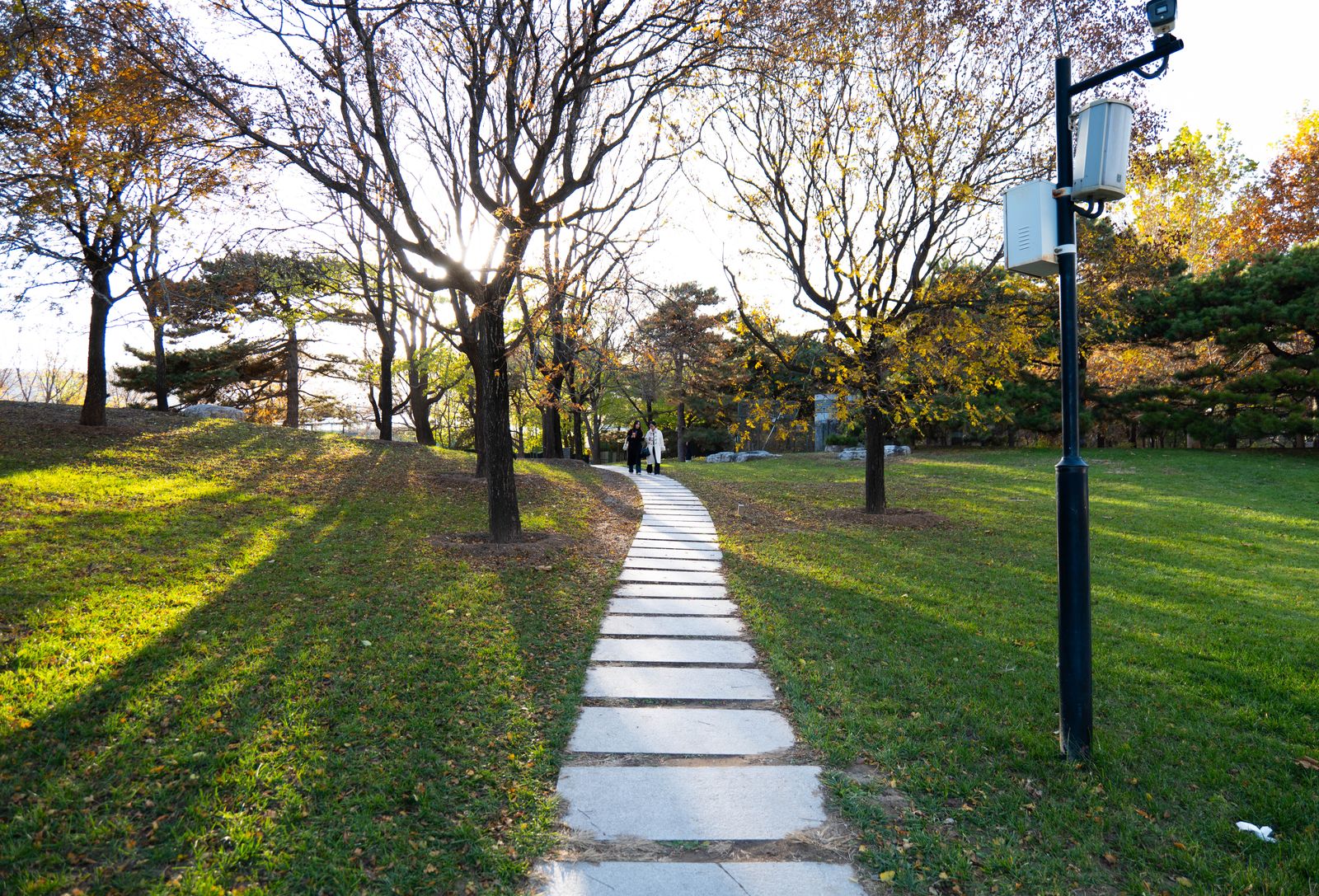
The useful rule is to plan for the mature spread of the plant, not the size of the pot it arrived in. Measure from the center of the plant, and keep the panel outside that radius.
- Ground-hugging plants under 6 inches tall — thyme, sedum, low sempervivum, moss phlox: plant right up to the stake. These never reach a panel set at normal pathway height.
- Plants that finish at 12 to 18 inches — heuchera, dwarf hebe, compact geranium, low grasses: leave roughly 12 inches of clear space on the sun side of the light.
- Plants that finish at 2 to 3 feet — lavender, nepeta, rudbeckia, most medium grasses: leave 18 to 24 inches, and put them behind the light relative to the sun, never in front of it.
- Anything that finishes above 3 feet — hydrangea, shrub roses, phormium, miscanthus: keep the light out of the bed entirely and stake it at the path edge instead.
- Climbers and self-seeders — nasturtium, sweet pea, hardy geranium that runs: these travel horizontally and will lie across a panel within weeks. Keep a bare strip or a gravel collar around each stake.
A planting plan that keeps panels clear all season
What to prune, and how hard
Aim to restore a clear view of open sky from the panel, not to reshape the plant. Take out the specific stems that arch across the light rather than shearing the whole clump, which looks better and keeps the plant productive.
Fall pruning has an extra job. Anything that drops a lot of leaf litter close to a panel — deciduous shrubs, ornamental trees, tall perennials — should be cut back before the main leaf fall rather than after, so the litter that lands is at least easy to sweep off. This is the same seasonal window as the rest of the cold-weather checklist, which is set out in preparing solar garden lights for winter.
Do not prune to open up a spot that has never had sun. If the only available light is under a mature canopy, plant choice will not save it, and the answer is a different position or a fixture chosen for weak-light conditions. Choosing for partial-shade walkways covers that decision.
Signs the problem is foliage rather than the light
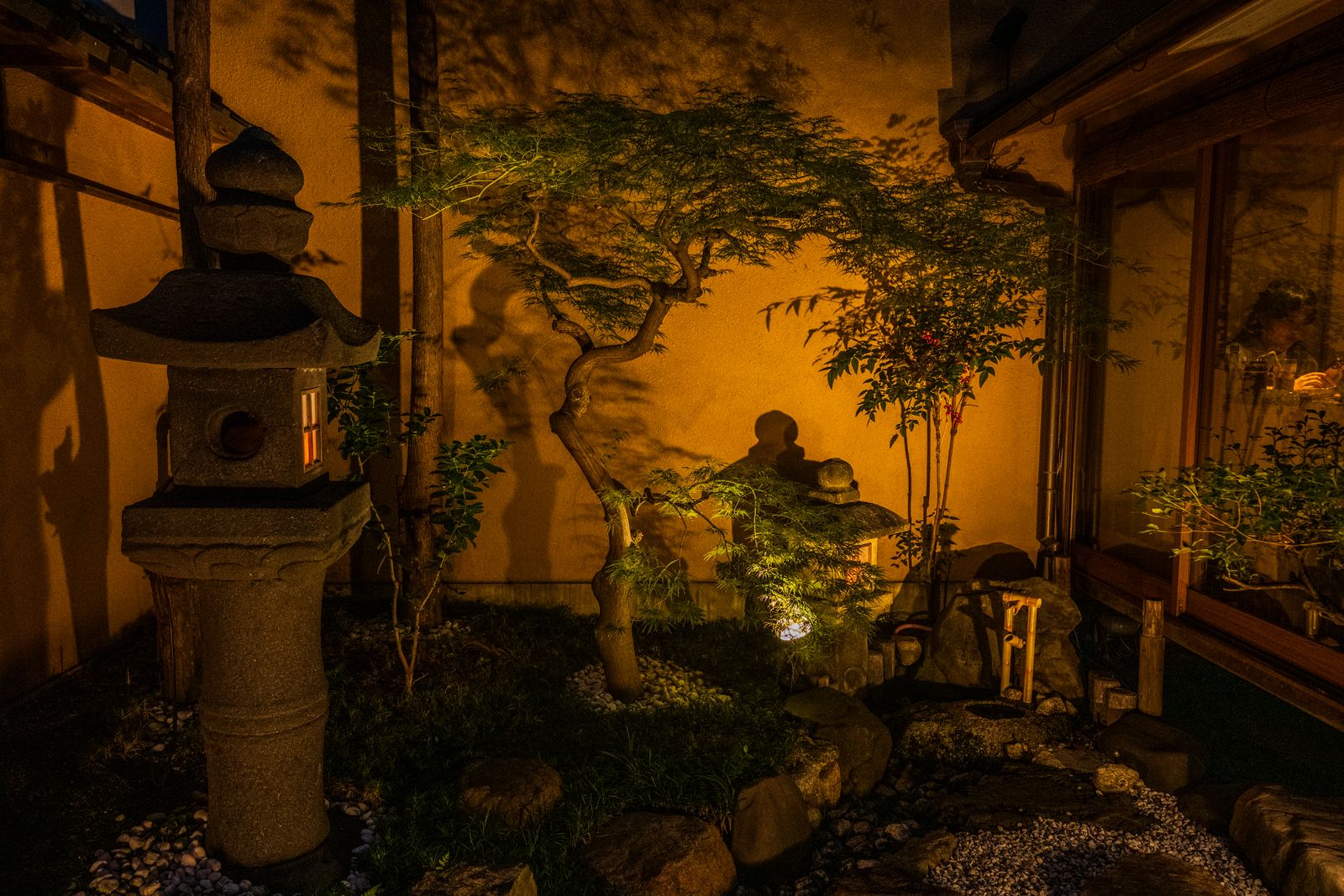
Photo by Guohua Song on Pexels
Foliage shading has a recognizable pattern that separates it from a genuine fault.
- The dimming appeared gradually over weeks in the growing season, not overnight.
- Some lights along the same path are fine and others are not, and the weak ones share a common feature — they sit deeper in planting.
- Output recovers after a hard prune, within two or three sunny days.
- The lights still switch on reliably at dusk; they simply run out earlier than they used to.
Frequently asked questions
Can grass clippings really stop a solar light working? Yes, temporarily. A mower throws a fine layer of clippings that dries to a mat on a panel, and that mat can cut a day's charge substantially. Wiping panels after mowing is a two-minute job that prevents a puzzling dim evening.
Should the panel face a particular direction in a planted border? Face it toward the most open patch of sky available, which in a border usually means angling it away from the tallest planting rather than at any fixed compass point. Unobstructed sky matters more than exact orientation.
Is it better to move a light or move a plant? Move the light. It takes a minute, causes no setback, and can be tested the same week. Transplanting an established perennial costs a season of growth and may not fix the shading anyway once it regrows.
Do evergreens cause more trouble than deciduous plants? For shading, yes, because they hold volume through the low-sun months when charging is already hardest. For litter, deciduous plants are worse. A path lined with low evergreens and no overhanging deciduous canopy is the easiest combination to maintain.
Next step
Pick a bright day, walk the path at noon, and look straight down at every panel. Any leaf, stem, or blade of grass visible over the glass is costing run time that night. Clear those, mark the two or three lights that sit deepest in planting, and check them again at peak growth in high summer — those are the positions worth rethinking before next season's planting goes in.
Cover photo by Shreyaan Vashishtha on Pexels.