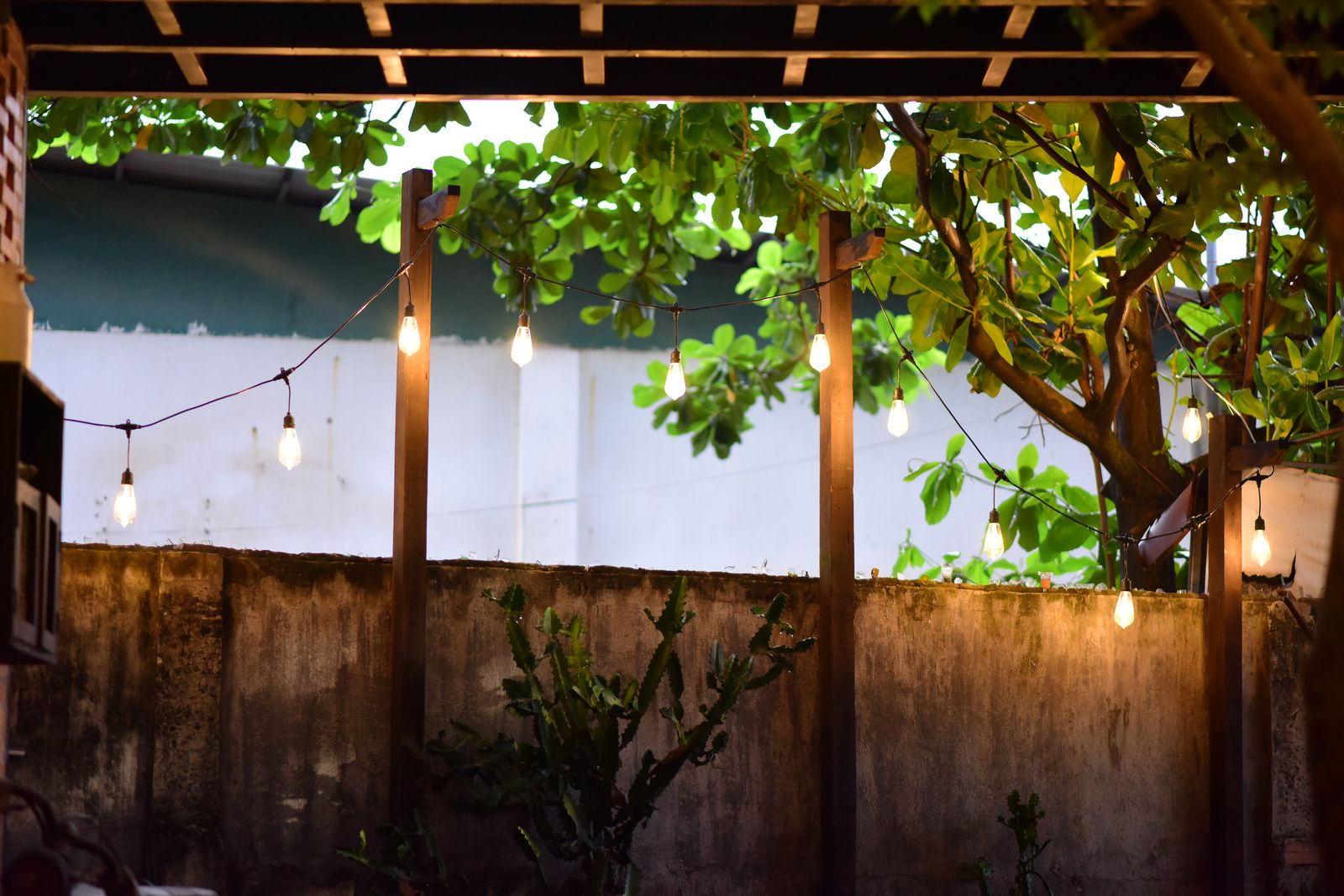
Solar Pathway Lights in Coastal Yards: Salt Air, Sand, and Sea Spray
Salt air is harder on outdoor lighting than rain is. Airborne salt settles on every surface, pulls moisture out of humid coastal air, and holds a thin film of conductive brine against metal and glass for days after the last storm. For solar pathway lights within a mile or two of the ocean, that film is the whole story: it hazes the panel so it charges less, it works into seams and fasteners, and it corrodes any exposed metal at the collar and the stake.
None of that means solar path lighting is a poor fit for a beach house. It often fits better than wired lighting, because there is no buried cable and no low-voltage transformer sitting in a salt-laden crawlspace. It just means the maintenance rhythm is different from an inland yard.
Why salt air damages fixtures that survive heavy rain
Rainwater is essentially distilled. It lands, sheets off, and dries. Salt spray leaves a residue behind, and that residue is hygroscopic — it absorbs water vapor from the air, so the surface stays chemically wet even on a clear day with no rain in the forecast. A fixture rated for immersion in fresh water can still be sitting in a slow electrochemical bath on a coastal property.
That distinction matters when you read durability claims. A waterproof design, like the one on the Waterproof Solar Garden Pathway Lights with Automatic On and Off, is built to keep liquid water out of the housing. Keeping water out is exactly the right defense, but the outside of the fixture is still exposed, and that is where coastal wear shows up first — on the panel glazing, the stake, and the small metal parts you never look at.
How far inland does salt spray actually reach?
Photo by KITSUN YUEN on Pexels
Deposition drops off quickly but not as quickly as most homeowners expect. Rough working zones:
- Direct exposure, roughly the first 300 feet from breaking surf. Visible salt crust between rains. Assume weekly attention in windy seasons.
- Moderate exposure, 300 feet to about half a mile. Salt arrives on onshore wind. Monthly attention is usually enough.
- Light exposure, half a mile to two miles. Salt is present but sparse. Quarterly attention, plus a rinse after named storms.
- Beyond two miles. Treat the yard as a normal humid climate rather than a coastal one.
The parts that fail first on a coastal path light
- Panel glazing. Salt haze is the number-one cause of gradually shorter run times near the ocean. It scatters light before it ever reaches the cell.
- The sensor window. The automatic on/off function reads ambient light. A salted, sand-frosted window makes the fixture read dusk too early or, more annoyingly, misjudge dawn.
- Stakes and ground spikes. Anything metal at soil level takes salt from above and salt-laden groundwater from below.
- Seams and gaskets. Salt crystals grow in a joint, and growing crystals apply real mechanical pressure to a gasket over a season.
- Screws and clips. Small fasteners have the least material to lose, so they are the first to seize or snap.
A ten-minute coastal maintenance routine
Fresh-water rinsing versus washing: what each one fixes
| Approach | Removes salt film | Removes oily haze | Effort | Good coastal cadence | |---|---|---|---|---| | Hose rinse only | Mostly | No | About a minute per set | Weekly in direct exposure | | Rinse plus soapy cloth | Yes | Yes | Under ten minutes per set | Monthly | | Rinse plus soap plus stake inspection | Yes | Yes | About twenty minutes | Twice a season | | Pressure washer | Yes, and also removes gaskets you wanted to keep | Yes | Fast and risky | Never on a sealed fixture |
Skip abrasive pads, ammonia glass cleaner, and any polish that leaves a coating. Coatings trap salt instead of shedding it.
Placement choices that cut salt exposure without hiding the panel
The tension in a coastal yard is real: the spots with the cleanest air are usually the shaded ones, and shade starves the panel. A few placements resolve it.
Put fixtures on the landward side of the path rather than the seaward side. On a typical four-foot walkway that single change puts the panel behind the fixture body relative to the prevailing spray, and it costs almost nothing in coverage.
Use existing windbreaks as filters rather than as shade. A dune grass clump, a low fence, or a hedge that blocks spray at knee height while leaving open sky above the fixture is close to ideal, because a solar panel cares about the sky directly overhead far more than about the horizon. If parts of your run end up shaded anyway, our notes on choosing lights for partial-sun walkways cover how to plan around it.
Keep fixtures out of irrigation spray if your system draws brackish or reclaimed water. That water is often saltier than the air.
Finally, resist the urge to move everything against the house wall. Reflected heat and splash-back from siding create their own problems, and the run of lights stops doing its actual job of marking the path edge. Coastal weather in general is covered further in our piece on solar pathway lights in extreme weather.
Sand is the second coastal problem
Blowing sand does mechanical damage that salt does not. It frosts panel glazing, packs into the base of a fixture, and buries the lower inch of a stake so the fixture leans. Two habits handle most of it: never wipe a dry panel, and lift each fixture an inch and reset it after a big blow rather than pushing it deeper into a pile of drifted sand.
Sand also collects in the small recess around a sensor window, where it holds moisture against the seal. A rinse handles it if you do it before the next dry, windy week bakes it in place.
FAQ
Do I need to bring solar path lights indoors during hurricane season? Not for the whole season, but bring them in ahead of a named storm. The risk is not water; it is a fixture becoming a projectile, or being buried under drifted sand and debris. Pulling a dozen stakes takes a couple of minutes and removes the problem entirely.
Is a rinse with a garden hose enough, or do I need distilled water? Municipal tap water is fine for coastal rinsing. Its mineral content is trivial next to sea salt. Distilled water only matters if you have very hard well water that leaves visible spots on the panel after drying, in which case a quick cloth dry after rinsing solves it.
Will salt air make the automatic on/off sensor unreliable? It can, indirectly. The sensor itself is inside the housing; what degrades is the window it looks through. A salted or sand-frosted window makes the fixture see less light than there really is, so it switches on earlier in the evening and runs the battery down faster. Cleaning the window usually restores normal behavior. If it does not, work through the causes in why solar lights stop switching on automatically.
How long should I expect coastal fixtures to last compared with inland ones? Expect a shorter service life at the same maintenance level, with the panel and the stake giving out before the light engine does. The gap narrows sharply if you rinse on schedule, because most coastal loss is cumulative surface damage rather than a single failure event.
A practical next step
Walk your path once with a bucket of fresh water and pick out the fixture that looks worst — usually the one most exposed to onshore wind. Clean that one properly, note how much brighter the panel looks when dry, and use it to set your rinse interval for the rest of the run. If cleaning it restores full evening run time, you have found your maintenance schedule rather than a hardware problem.
Cover photo by Sóc Năng Động on Pexels.