How far apart should Waterproof Solar Pathway Lights be?

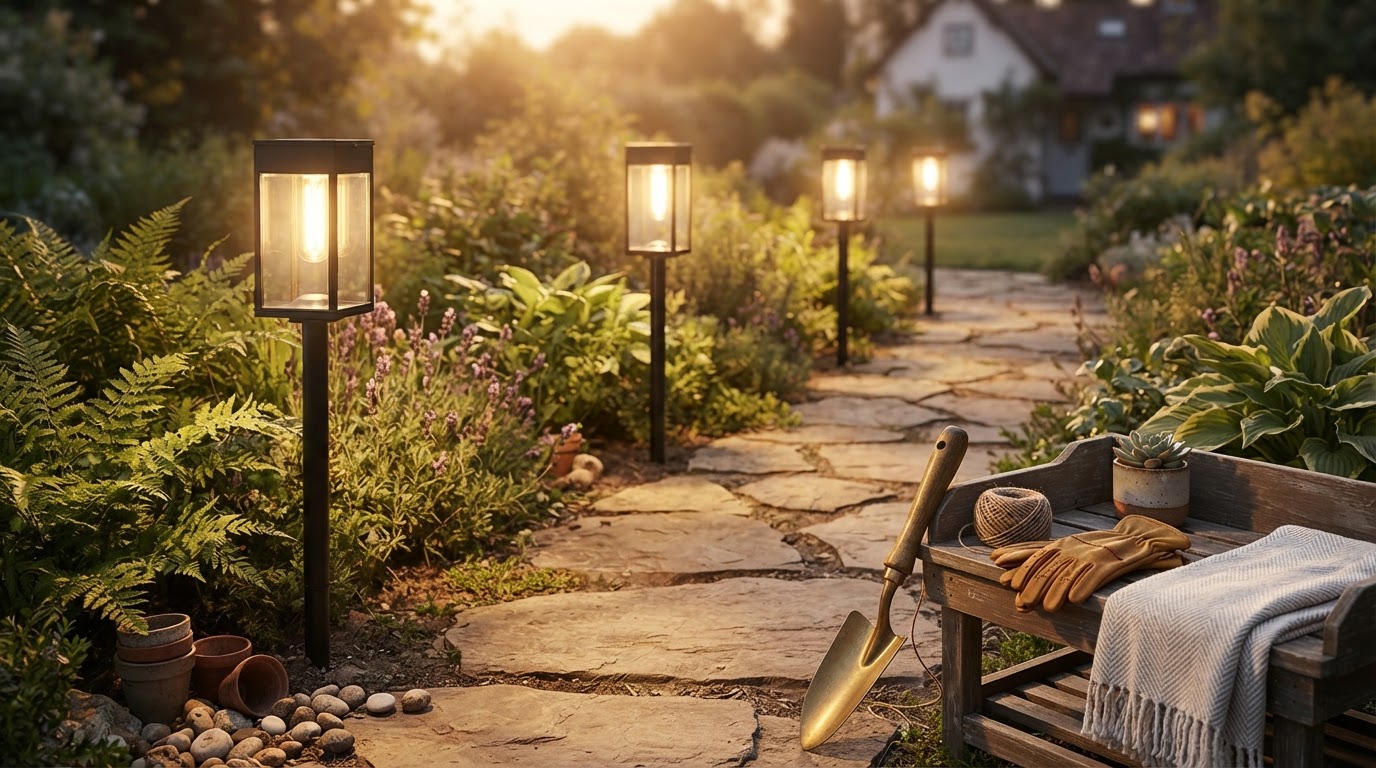
August 3, 2026 — To maintain a continuous path of light without dark zones, Waterproof Solar Garden Pathway Lights with Automatic On And Off should be installed at a maximum distance of 8 feet from one another.
Homeowners often install solar lighting as an afterthought, treating individual stakes as isolated accents rather than a cohesive navigation system. Proper placement determines whether a garden path remains a safety hazard or becomes a functional walkway after dusk. The conventional wisdom says you can stretch these distances to 15 feet, but that ignores the reality of light scatter and the specific output of solar-powered LEDs.
How many feet should you leave between pathway lights?
Here's the part nobody talks about: the 15-foot spacing recommendation found in some general guides is a recipe for "hot spotting," where bright circles of light are separated by deep shadows. Homelectrical notes that while the broad range for pathway lights is 5 to 15 feet, the tighter end of that spectrum is necessary for actual visibility. For Waterproof Solar Garden Pathway Lights with Automatic On And Off, a spacing of 5 to 8 feet is the functional limit. Run the math: if a standard solar LED has a light spread radius of 3 to 4 feet, any gap larger than 8 feet creates a 2-foot dead zone of total darkness. Lighting Warehouse supports this, stating that 5-8 feet is the industry standard to ensure a well-lit walkway without dark gaps. In heavy-duty or rainy environments where visibility is already compromised, exceeding these measurements increases the risk of tripping on uneven terrain.
Where should the first and last solar lights be placed?
Placement must prioritize the transition points of a walkway rather than centering the lights based on the total path length. The first and last Waterproof Solar Garden Pathway Lights with Automatic On And Off must be positioned within 12 inches of the path's start and end points. VOLT Lighting emphasizes that the first and last path lights should be positioned very near the beginning and end of the path to signal the entry and exit clearly to pedestrians. If a path is 50 feet long, it is a mistake to simply divide 50 by a set increment; you must first anchor the terminals and then calculate the internal intervals. I'll change my mind when manufacturers produce a solar cell capable of a 20-foot throw without significant lumen depreciation, but until then, physical proximity is the only way to ensure the "automatic on" feature actually serves a safety purpose.
Quick answers
Q: How do I calculate the number of lights for a 40-foot path? A: Divide the total length by 8 feet and add one additional unit for the terminal end, meaning a 40-foot path requires exactly 6 Waterproof Solar Garden Pathway Lights with Automatic On And Off.
Q: Does rain or waterproof rating affect light spacing? A: Yes, because moisture in the air refracts light; in high-humidity or rainy climates, spacing should be reduced to 5 feet to maintain the same ground-level brightness.
Q: Should lights be placed directly opposite each other or staggered? A: Staggering lights on alternating sides of the path every 6 feet provides a wider field of illumination than placing them in a straight parallel line.
Learn more about Waterproof Solar Garden Pathway Lights with Automatic On And Off at https://gardenpathwaylights.com.
Sources
- How Far Apart Should Pathway Lights Be?
- A Guide to Landscape Light Placement | Lighting Warehouse
- How to Select Path & Area Lights
