Do Solar Pathway Lights Save Money? Electricity & Installation FAQ
Solar pathway lights are worth it when you value $0 DIY install, 8-10 hours of 3000K light, and the ability to move or replace one fixture without digging. Lifetime value depends on battery care, not the LED — the diode is rated around 50,000 hours while the rechargeable cell is the replacement cost you actually pay. Skip solar if you need stadium brightness; buy it if you want a path you can see without a permit.
What you are paying for
The purchase is a pack of independent, waterproof solar garden pathway lights with automatic on and off. The lifetime value is nights of 10-15 lumens along a walk you did not excavate, plus the option to lift everything if you move. Replacement cost is granular: one stake, one cell, one yellowed lens — not a dark transformer and a mystery splice.
Worth it also means 'worth the look.' Warm 3000K at modest lumens is a garden path language. If the house wants cool, high-output facade lighting, solar will feel underpowered even when it is working. That is a design mismatch, not a product failure.
A 1-year warranty covers early defects. Lifetime value after that is whether you give the 0.2W-0.5W panel 6-8 hours of sky and store batteries with some charge in the off-season.
Where the money goes over years

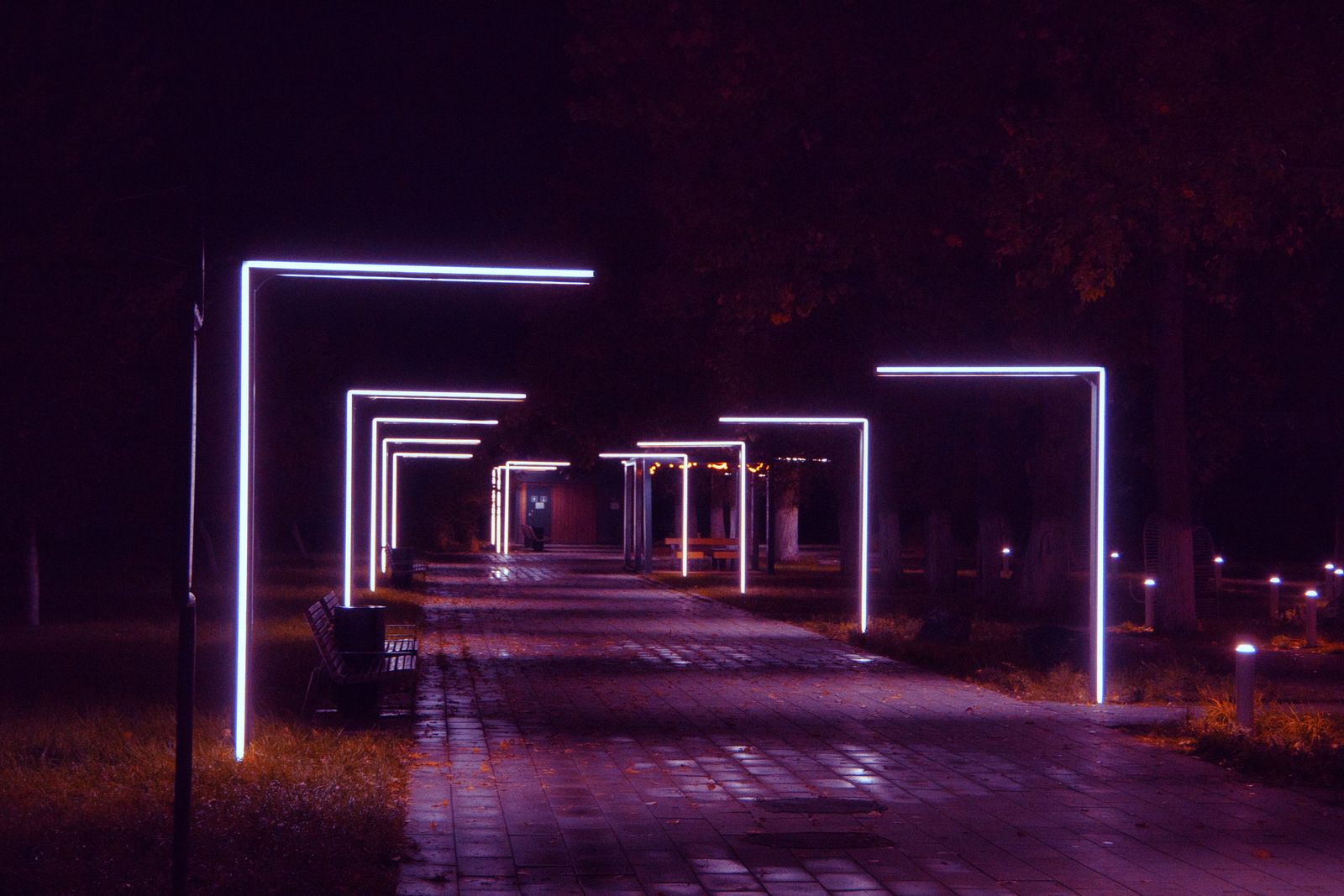
Photo by Alfo Medeiros on Pexels
Year zero: hardware plus $0 labor if you DIY. Years 1-3: occasional cleaning, maybe a single unit that sat in shade. Later: batteries that no longer hold 8-10 hours. The LED is rarely the replacement cost. People throw away whole fixtures because the cell faded; that is optional. Resting, charging, and replacing a cell (where the unit allows service) stretches lifetime value.
Compare that with wired: higher install, low operating cost per night but not zero, and a repair that can mean digging. Wired can be worth it on a long, bright drive. It is a different lifetime shape.
Lifetime value comparison
| Question | Solar pathway lights | Wired landscape lighting | | --- | --- | --- | | Worth it for a garden footpath? | Usually yes at 10-15 lumens, 6-8 ft | Only if you want more brightness | | Install | $0 DIY | Trench + transformer | | Electric bill | None | Ongoing | | Typical replacement cost | One unit or battery care | Fixture, splice, or transformer | | LED life | About 50,000 hours | Varies by lamp | | Move / resale of the lights | Pack them | Leave the cable | | Warranty on this style of solar | 1 year | Depends on the wired brand |
When the honest answer is no
Solar is not worth it as the only light on a wide, fast driveway if you need high visibility for cars. It is not worth it in a courtyard that never sees the sky. It is not worth it if you will not wipe a panel twice a year and then blame the product for a three-hour night.
It is worth it for garden walks, rental yards, allotment paths, and any edge you refuse to trench. Lifetime value is highest when placement is honest: 6-8 hours of charge, 6-8 foot spacing, sensors that see real dusk.
Worth-it placement and install checklist
Photo by Max Vakhtbovych on Pexels
- [ ] Confirm the path is a footpath job (10-15 lumens) not a flood job.
- [ ] Verify 6-8 hours of sky at each stake before you buy a large pack.
- [ ] Plan 6-8 foot spacing so you are not over-buying replacement units you do not need.
- [ ] Stake 4-6 inches; keep panels and automatic sensors cleanable.
- [ ] Budget a future battery rest or replacement as the real lifetime cost.
- [ ] Do not count on the 50,000-hour LED as the thing that fails first.
- [ ] If you might move, count reversibility as value.
- [ ] Walk away from solar on stretches with no sun — that replacement cost will be 'all of them, soon.'
Frequently asked questions
Are solar pathway lights worth it compared with wired?
For most garden paths, yes: $0 DIY, no bill, and one-fixture replacement. Wired is worth it when you need higher brightness and already accept a trench.
What is the lifetime of the battery versus the LED?
The LED rating around 50,000 hours is far longer than a typical rechargeable cell's useful dusk-to-dawn life. Treat the battery as the lifetime-value part.
How much is replacement cost if one light dies?
You replace or rest one unit. That is the point of independent stakes. A wired fault can take the run with it.
Does a 1-year warranty mean they only last a year?
No. The warranty is the early-fail window. Lifetime after that is charge, placement, and storage habits.
Can I improve lifetime value without buying more lights?
Yes. Sun, spacing, clean glass, and off-season storage do more than a second pack in the same shade.
Related reading
- how to store solar pathway lights without ruining batteries
- battery troubleshooting guide when a light dies early
- buying guide to easy-install solar garden light packs
- FAQ on mixing solar with mains if you already have wiring
What to do next
If your path can take 6-8 hours of sky and you only need to see the walk, the value is already there. Stake waterproof solar garden pathway lights with automatic on and off at 6-8 feet, keep the panels clean, and treat the battery — not the LED — as the part you will eventually refresh.
Cover photo by Кирилл Абрамов on Pexels.