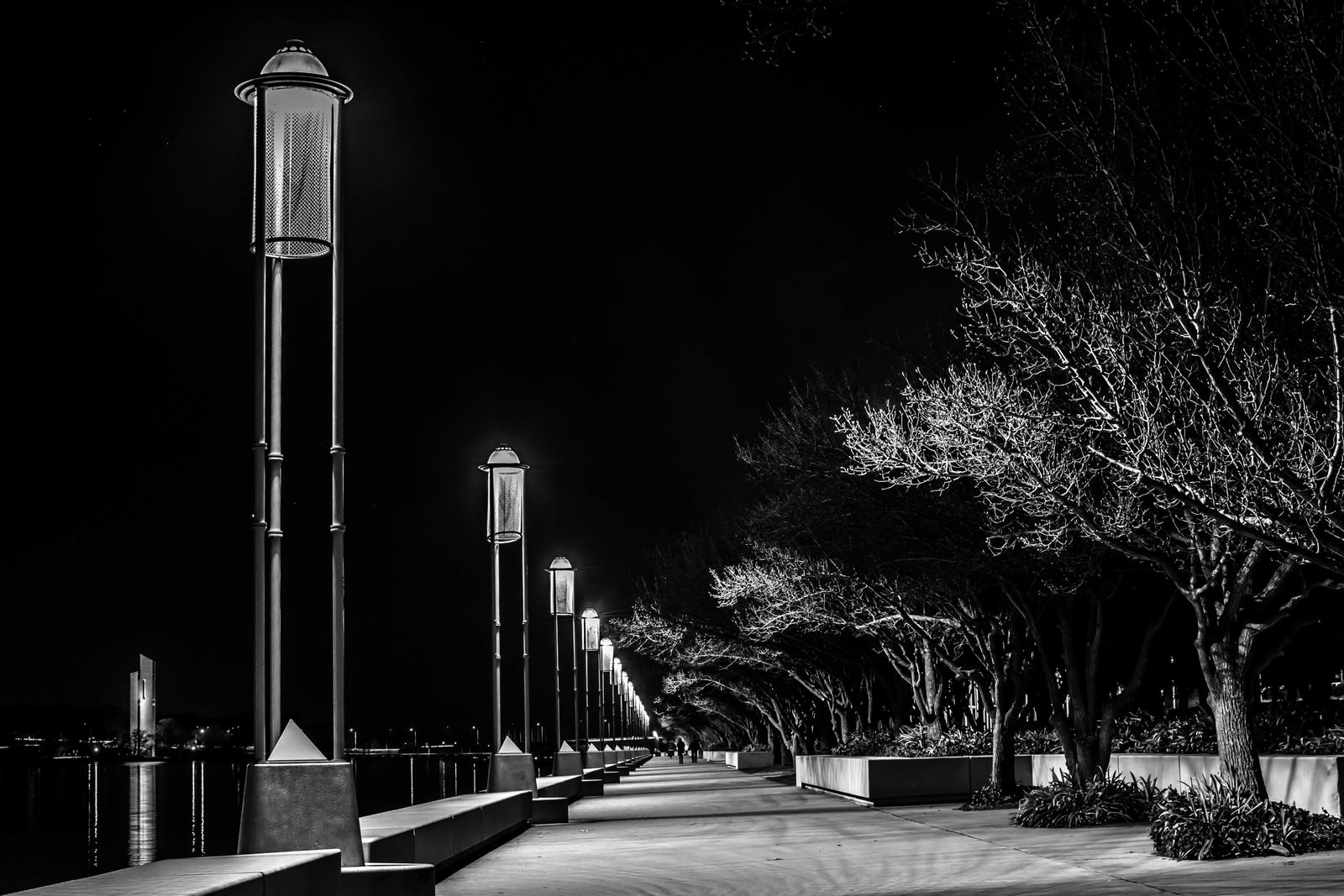
Solar Pathway Lights vs. Hardwired Outdoor Lighting: Which Is Right for Your Walkway?
Solar pathway lights typically deliver 10-15 lumens per fixture, run 8-10 hours on a charged battery, and keep working when one unit fails. Hardwired pathway lights can be brighter because they pull continuous power, but durability then depends on buried cable, a transformer, and a circuit that fails as a group. For most garden walks, waterproof solar with automatic on/off is the practical answer; hardwired wins when you need high lumens on a long, excavated run.
Lumens: how much light actually lands on the path
Lumens measure output at the fixture, not how well you can see a step. A solar pathway light in the 10-15 lumens range looks modest on a spec sheet and useful on a walk because the LED sits close to the ground and the color is a warm 3000K. Cool white at the same lumens can feel harsher and still leave the walking surface looking patchy.
Hardwired landscape fixtures are often specified at higher lumens because they are not rationing a small cell. That extra brightness helps on a wide driveway. On a typical garden path it can also create glare and a runway look you did not want. If the job is seeing the edge of the pavers, solar lumens are usually enough.
Battery life is the solar limiter, not the diode. After 6-8 hours of charging on a 0.2W-0.5W panel, expect 8-10 hours of light. Hardwired lights have no battery life in the same sense: they run until a timer, photocell, or switch cuts them, and they draw from the house every night.
Battery life versus continuous power
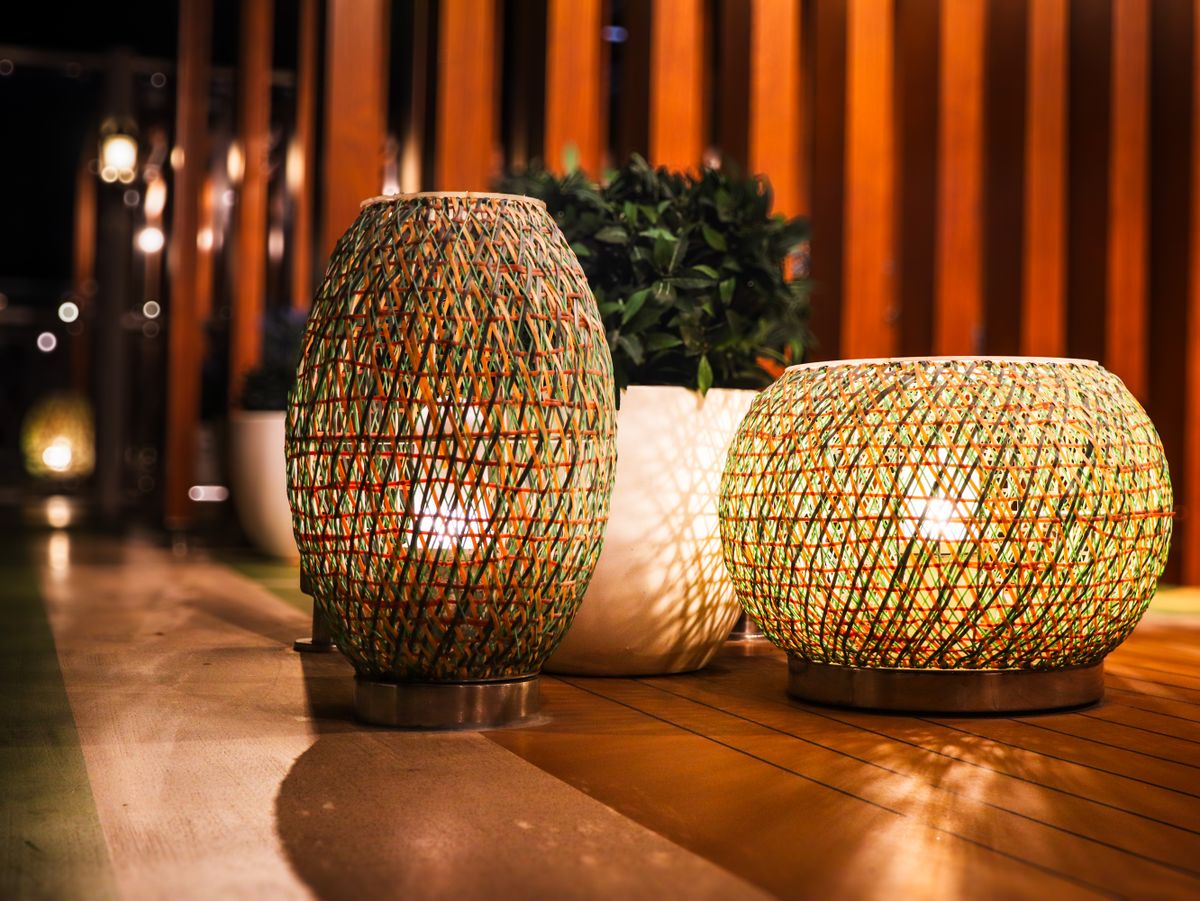
Photo by Sight See-RR on Pexels
A rechargeable cell is a budget. Spend it slowly with 10-15 lumens and you get a full night. Ask a small panel to drive a brighter LED and you get a short evening and a dark 2 a.m. walk. That is why more lumens is not automatically better in solar: it can steal battery life.
Hardwired pathway lights skip that tradeoff. The transformer feeds the run all night, so output stays flat. The cost is failure mode: a nicked jacket, a flooded splice, or a dead transformer darkens every fixture on that cable. Solar durability works the other way: one stake dies, the rest keep their battery life and their glow.
The LED itself is not the weak part. A 50,000-hour diode will outlast the cell and the stake. Durability questions should focus on the battery, the panel, the gasket, and — for hardwired — the trench.
Solar vs hardwired pathway lights at a glance
| Factor | Solar pathway lights | Hardwired / low-voltage | | --- | --- | --- | | Lumens per typical garden stake | 10-15 lumens, 3000K warm | Often higher; depends on fixture and transformer | | Nightly runtime | 8-10 hours after a 6-8 hour charge | As long as the circuit is powered | | Brightness through the night | Can taper as the cell empties | Flat output from continuous power | | Warm vs cool | Warm 3000K reads clearly at low lumens | Any color temperature you specify | | Spacing | 6-8 feet along a footpath | Often tighter if you want a even wash | | Install cost (labor) | $0 DIY stake-in | Trenching, transformer, possible permits | | Durability pattern | One fixture fails at a time | A cable or transformer fault can kill the run | | Automatic on/off | Built-in dusk sensor on each unit | Timer, photocell, or switch at the source |
Durability: water, soil, and what actually fails
Waterproof solar garden pathway lights with automatic on and off are built as sealed, independent units on ABS plastic stakes. Rain hits the housing, not a buried jacket. Push the stake 4-6 inches into soil and the fixture can be lifted for a rinse or a battery rest. That serviceability is a durability feature.
Hardwired durability looks better on paper and worse in wet clay. Cable survives if the jacket is intact and the splices stay dry. It fails when a shovel, frost heave, or a puddling yard finds a nick. If your path already puddles, independent solar units are usually the more durable layout.
Warm versus cool also affects perceived durability. A warm 3000K solar stake still looks on at 10-15 lumens. A cool, bluish light at the same output looks cheap, so people replace working fixtures.
Install and placement checklist (solar or hardwired)
Photo by Warren Griffiths on Pexels
- [ ] Walk the path after dark and mark the two or three truly dark spots before you buy hardware.
- [ ] Measure the run and plan 6-8 feet between solar stakes; tighten only on steps, curves, or wheelchair edges.
- [ ] For solar, pick positions with 6-8 hours of sky on the panel — not the shadiest decorative corner.
- [ ] Stake ABS plastic spikes 4-6 inches deep, vertical, with the panel facing the brightest sky, not the house wall.
- [ ] Keep the automatic sensor window pointed away from porch lamps, so dusk-to-dawn is real dusk-to-dawn.
- [ ] For hardwired, map the transformer location, trench route, and every splice before you cut turf.
- [ ] Confirm you can restore the surface: sod, gravel, or pavers. A bright path with a scarred lawn is not a win.
- [ ] Test one solar fixture through a full charge cycle before you commit the whole pack to a shady layout.
Frequently asked questions
Are 10-15 lumens enough for a garden pathway?
For a typical footpath, yes, if the lights are warm 3000K, spaced 6-8 feet, and aimed at the walking surface rather than at eye height. They will show a step edge, a gravel change, and a hose left across the walk.
How long does the battery last each night versus over the years?
Each night, a full 6-8 hour charge should yield 8-10 hours of light. Over the years, the rechargeable cell fades, not the LED. Resting a depleted battery and keeping the 0.2W-0.5W panel clean do more for lifespan than buying a brighter stake.
Which option has better durability in rain and freeze-thaw soil?
Solar usually wins on a wet residential path because there is no trench to flood. Hardwired can last decades if the cable is buried correctly and never nicked. Durability follows the failure mode you can live with: replace one solar unit, or diagnose a dark wired run.
Can I mix solar and hardwired on the same path?
Yes. Many yards use hardwired brightness near the door and solar along the garden edge. Keep the solar sensors out of the hardwired beam so automatic on/off still works. The two systems do not share a circuit and should not share a trench.
When is hardwired actually worth the extra effort?
When you need higher lumens on a wide drive, want a single switch for the whole facade, or already have a trench open for irrigation or a fence. If the only goal is a safe, warm garden walk with no electrician, solar is the shorter path.
Related reading
- how to install solar pathway lights without wiring
- comparison of solar vs wired lighting on a shared alley
- FAQ on mixing solar and mains outdoor lighting
- install guide to low-voltage trenching and permits
What to do next
Walk the path at dusk this week with the flashlight off. If 10-15 lumens at 6-8 foot spacing would show every step, stake waterproof solar garden pathway lights with automatic on and off in the sunniest strip beside the walk. If you need a brighter, switchable wash and already plan to excavate, budget the trench first.
Cover photo by Warren Griffiths on Pexels.