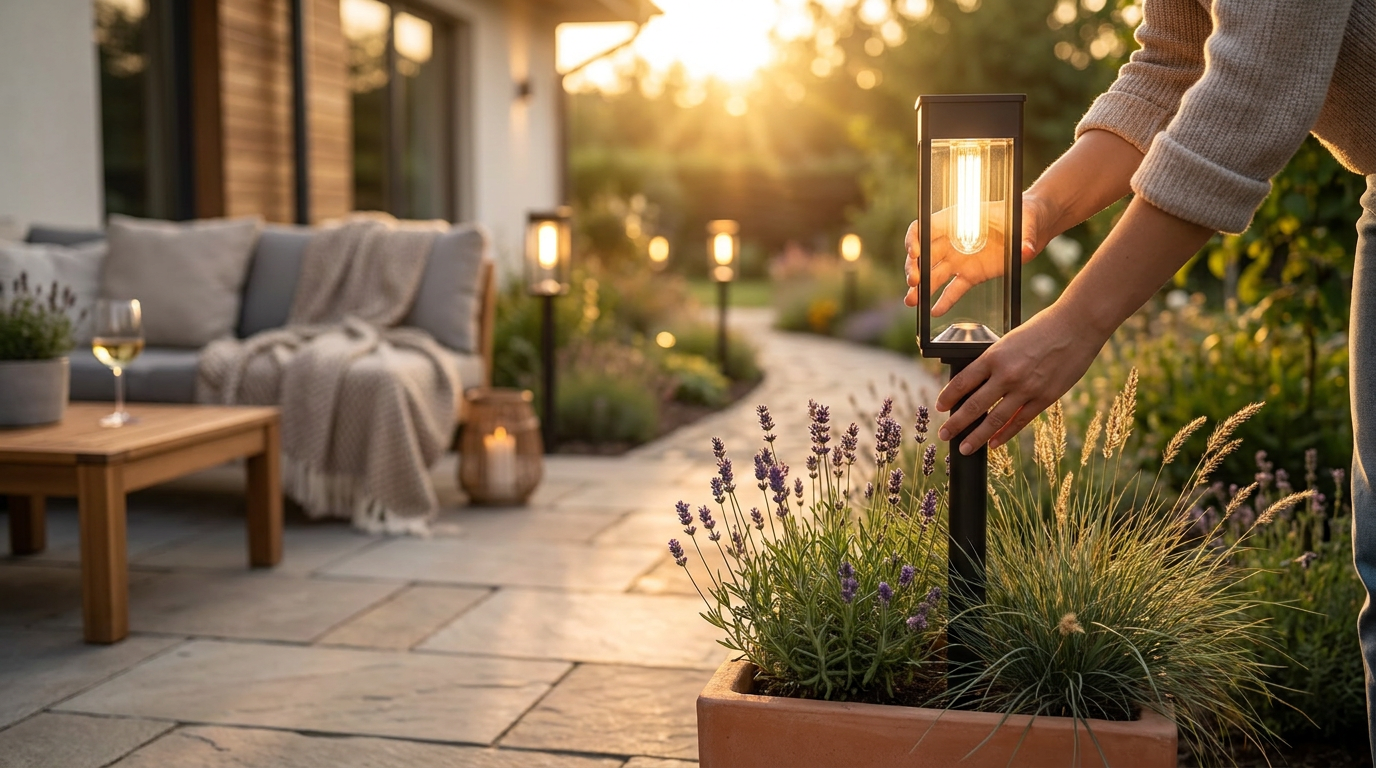
Rethinking Lumens in Modern Black Solar Landscape Lighting
 Maya ChenContributing Editor
Everyone tells you to focus on lumens, but prioritizing brightness is the fastest way to make your modern landscape look cheap and over-lit. The conventional wisdom says that higher lumen counts equal better performance, a metric often used to justify solar as a replacement for wired systems. Here's the part nobody talks about: effective landscape lighting isn't about raw power; it's about control and subtlety. A high-lumen fixture is only as good as its ability to place light exactly where it's needed—and nowhere else.
The Problem with the 'Airport Runway' Effect
When every fixture along a path blasts out 100-200 lumens, the result is a flat, glaring strip that resembles an airport runway. This uniform over-illumination washes out the texture of your stonework, the colors of your plants, and the architectural details of your home. Instead of creating an inviting atmosphere, it produces a sterile, commercial feel that detracts from the property's value. The goal is to see the path, not to obliterate the surrounding landscape with uncontrolled light. This approach sacrifices ambiance for a false sense of security and performance.
Designing with Shadow, Not Just Light
Photo by Angelo Capitanio on Pexels
Professional lighting design focuses on a technique called 'light layering'—using varied intensities to create visual interest and depth. According to lighting manufacturer VOLT, this involves combining different types of light to highlight features, create ambiance, and provide safe passage. For modern black solar landscape lighting, this means using fixtures not as floodlights, but as tools to cast focused pools of light. The interplay of light and shadow is what guides the eye and makes a landscape feel curated. This is where creative layouts become far more important than raw output.
So, how many lumens should a path light actually have?
For pathway marking, where the goal is safe navigation, a fixture providing 10 to 50 lumens is often sufficient, especially when spaced correctly. The objective is to create pools of light for your feet to follow, not to light up the entire walkway. This lower output prevents glare and preserves night vision, allowing you to appreciate the rest of your yard. It also places less demand on the solar panel and battery, improving reliability. The focus should be on placement and beam control to enhance curb appeal, not on a high lumen number.
Does the black finish serve a design purpose beyond aesthetics?
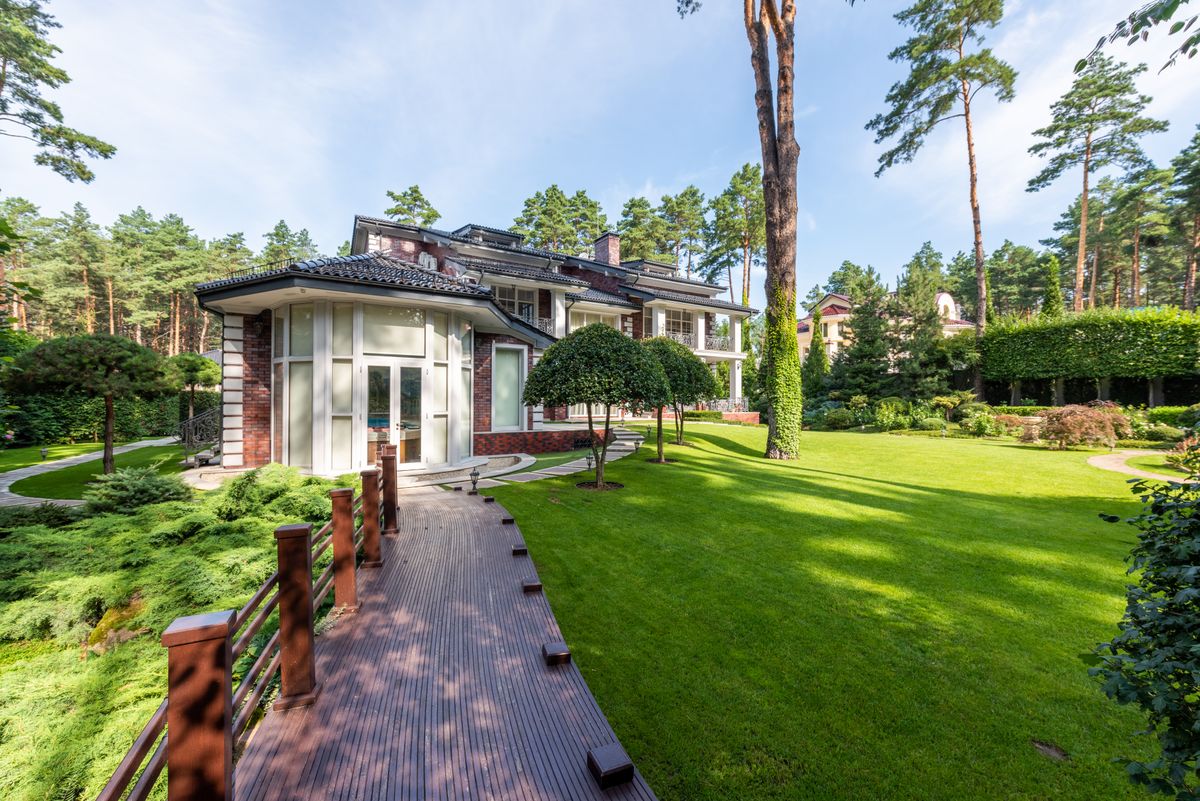
Photo by Max Vakhtbovych on Pexels
While the matte black finish is primarily an aesthetic choice that helps fixtures disappear into the landscape during the day, the fixture's physical design is critical. Modern black solar landscape lighting often features hoods, shields, or louvered designs. These elements are not just stylistic; they are essential for controlling light spill and directing illumination downward onto the path where it's needed. This prevents upward glare and reinforces the principle of using focused light. A well-designed, low-lumen black fixture that is easy to install will outperform a poorly designed, high-lumen one every time.
I'll change my mind when manufacturers stop marketing lumens as the primary metric of quality and start providing photometric data that shows beam spread and intensity distribution. Until then, the most effective approach is to ignore the brightness arms race and focus on deliberate, low-intensity placement.