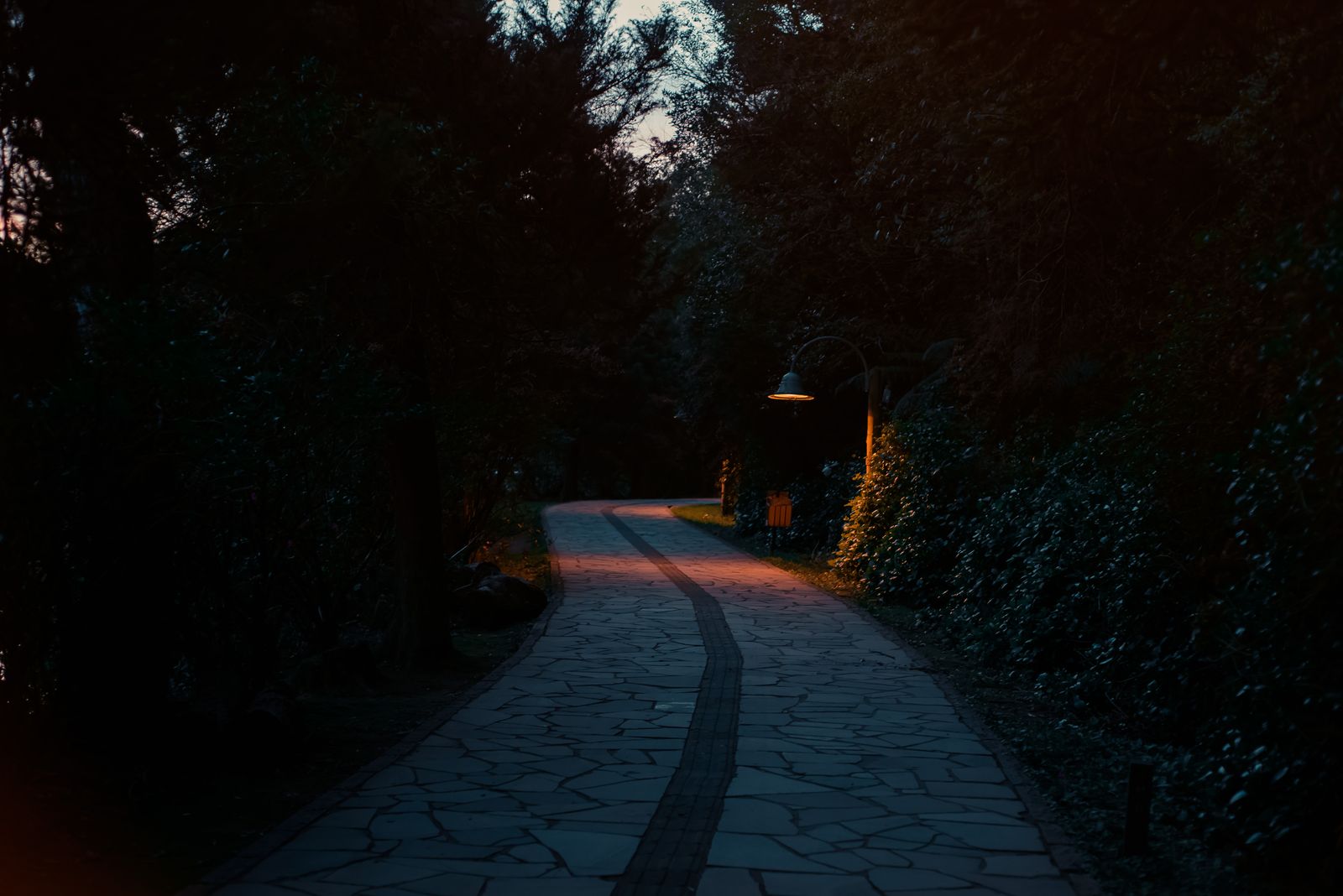
Solar Pathway Light Efficiency Compared: Low-Light Performance Features
Solar pathway light efficiency in low-light is limited by panel wattage (0.2W-0.5W), charge hours, and how clean the cell stays — not by a magic cloudy-day chip. Compared with wired fixtures, solar is weaker in deep shade and stronger where you cannot trench. Low-light performance features that actually matter: warm 3000K output so 10-15 lumens read clearly, automatic on/off that does not false-trigger, and a panel you can aim at the brightest patch of sky.
What 'efficiency' means on a path light
On a rooftop array, efficiency is watts out per watts in. On a solar pathway light, the useful meaning is hours of visible path per hour of sky. A 0.2W-0.5W panel charging 6-8 hours to run 8-10 hours at 10-15 lumens is an efficient garden device. Asking that panel to mimic a wired flood is an inefficient wish.
Compared features should be optical and behavioral. Warm 3000K is more efficient for human night vision on a walk than cool white at the same lumens. A low head is more efficient than a tall glare source. A clean panel is more efficient than a larger dirty one. Automatic on/off that only runs at real dusk is more efficient than a unit that wakes at 3 p.m. because it sees a hedge.
Waterproof solar garden pathway lights with automatic on and off bundle those features in a stake you can move. That moveability is an efficiency feature: you can put the cell where the photons are.
Low-light days versus low-light nights
Low-light days (cloud, winter, shade) starve the panel. Performance then is residual battery plus whatever trickle arrived. Features that help: open sky, not 'high lumen' stickers. Low-light nights (no moon, wet pavers) need contrast. Features that help: 3000K, 6-8 foot spacing, beams on the ground.
Do not confuse a dim 2 a.m. with a bad LED. The LED rating around 50,000 hours is not the efficiency bottleneck. The bottleneck is whether last Tuesday's sky filled the cell.
Low-light performance features compared
| Feature | Helps efficiency when | Does not help when | | --- | --- | --- | | 0.2W-0.5W panel in real sun | 6-8 hour charge is possible | Deep shade, snow cap, dirty glass | | Warm 3000K at 10-15 lumens | You need to read the walking surface | You wanted a cool architectural wash | | 6-8 foot spacing, low heads | Pools overlap without sensor wars | You pack them 3 feet apart facing each other | | Automatic on/off | True dusk; no competing lamps | Porch lights fool the sensor all night | | Moveable ABS plastic stake | You can chase the bright pocket | You treat placement as permanent decor | | Wired continuous power | Deep shade you must light | You cannot trench or you rent |
A fair comparison with wired
Wired efficiency is electrical: watts at the lamp, losses in the transformer. It wins on raw brightness in gloom. Solar efficiency is logistical: no trench, no meter, one-unit failures. Compared honestly, solar wins on paths with sky and loses on paths without it.
If a marketing card lists 'high efficiency' without mentioning panel wattage, charge hours, or color temperature, ignore it. The performance features you can verify in the yard are the ones in the table.
Placement checklist for efficient low-light performance
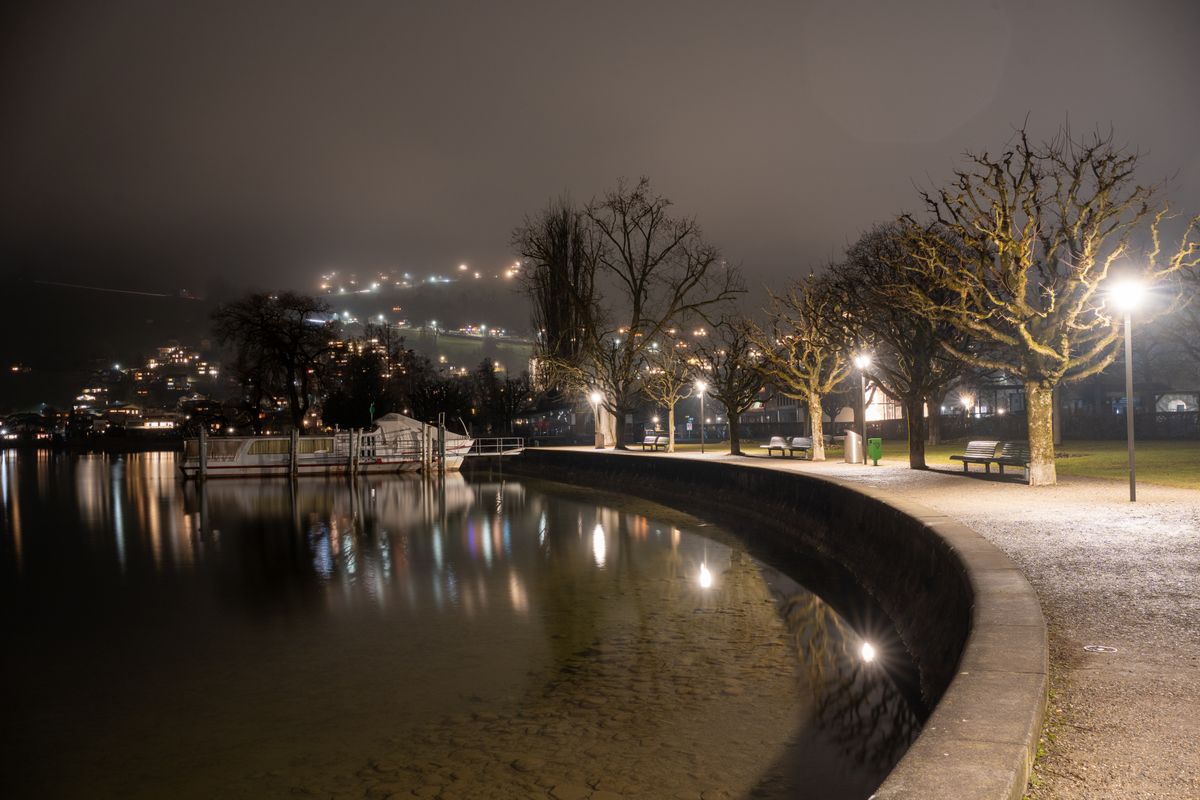
Photo by René Lussi on Pexels
- [ ] Aim the 0.2W-0.5W panel at the brightest sky, not at the facade.
- [ ] Use warm 3000K and 6-8 foot spacing so 10-15 lumens read as a path, not as dots.
- [ ] Keep heads below eye level for wet-night contrast.
- [ ] Give automatic sensors a darker view than the LEDs they sit beside.
- [ ] Wash the cell; film is an efficiency loss you can see with a finger.
- [ ] Stake 4-6 inches, vertical — a tilted panel is a smaller collector.
- [ ] After a grey week, move the worst performer two feet toward open sky before replacing it.
- [ ] Do not add fixtures to fix shade; that lowers efficiency per dollar and per night.
Frequently asked questions
Is a higher-lumen solar light more efficient?
Not if it empties the battery by 11 p.m. Efficiency on a path is hours of useful light. 10-15 lumens all night beats a brief glare.
Do 'low-light' or cloudy-day features change the panel physics?
The panel still needs photons. Features that help in low light are optical (warm 3000K, clean glass, placement), not a secret charge from darkness.
How does 3000K compared with cool white change performance?
Same lumens, better readability on a garden path. Cool white can look brighter in a photo and worse underfoot.
Should I compare solar panel efficiency to a roof array?
Only loosely. These are 0.2W-0.5W cells on a stake. Placement and cleanliness dominate.
When is wired more 'efficient' as a system?
When the path has no sun and must be bright. Then solar spends hardware to produce little light — the inefficient choice.
Related reading
- guide to making solar pathway lights stay on all night
- how to restore brightness on cloudy yellowed lenses
- comparison of driveway vs footpath solar placement
- FAQ on mixing solar and mains if you need both
What to do next
Pick the dimmest fixture on a grey evening. Wash the panel, rotate it toward open sky, and confirm the automatic sensor is not fighting a lamp. That is a larger efficiency gain than shopping for a sticker that says 'low light.'