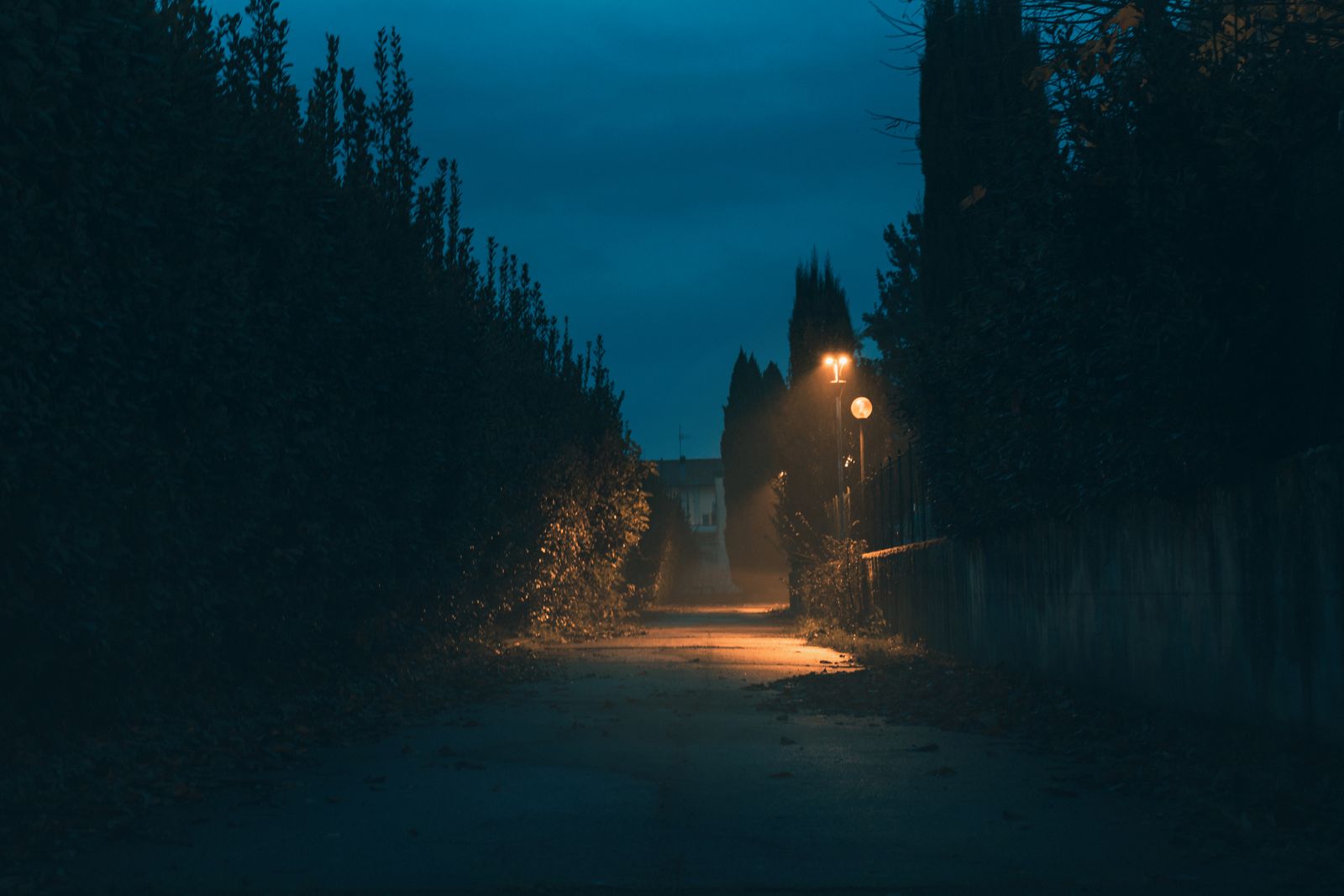
Driveway vs. Footpath Solar Lights: How Placement and Count Differ
A driveway and a garden footpath need different lighting, and buying one set for both is the most common mistake homeowners make. A footpath needs soft, low, closely spaced light that shows where the edge is. A driveway needs sparse, well-set-back markers that a driver can read at speed from twenty or thirty feet away, without glare through a windshield. The fixture can be the same; the layout, the setback, and the count are not.
This guide separates the two jobs so you can buy once and place correctly.
What each surface is actually asking the light to do
A footpath is walked at about three miles per hour by someone looking down. The lighting job is edge definition and trip-hazard visibility within a step or two of the foot. Light that spills onto the walking surface in overlapping pools is exactly right.
A driveway is driven at five to fifteen miles per hour by someone looking ahead and to the sides, judging clearance against a car body they cannot see the corners of. The lighting job is boundary marking. A driver needs to know where the pavement ends and the lawn, ditch, or planting bed begins, and needs that information early enough to steer. Puddles of light on the pavement itself do very little; headlights already handle the pavement.
That difference drives every other decision below.
Side-by-side: driveway versus footpath requirements
Photo by Plato Terentev on Pexels
| Requirement | Garden footpath | Residential driveway | |---|---|---| | Primary job | Show the walking surface and edge | Mark the boundary for a moving vehicle | | Typical spacing | Closer, with overlapping pools | Wider, at decision points | | Setback from edge | A few inches, close to the path | Farther back, clear of tire and plow paths | | Fixture height | Low is fine and often preferred | Slightly taller reads better from a car | | Glare tolerance | Low — glare at eye level is unpleasant | Very low — glare through glass is a hazard | | Placement priority | Continuous, even coverage | Corners, curves, gate posts, and the apron | | Impact risk | Low | High: tires, backing up, plows, trash bins |
Where driveway lights should actually go
Skip the instinct to run an even line down both sides. On a driveway, uniform spacing wastes fixtures on the straight middle section where headlights already do the work, and under-lights the places drivers get wrong.
Prioritize in this order:
Set driveway fixtures back farther than feels necessary — well clear of where a tire tracks when someone cuts the corner, and clear of where snow lands when the drive is plowed or shoveled. A light that gets clipped twice a winter is not a durability problem; it is a placement problem.
Where footpath lights should go
Footpaths reward the opposite approach: even, continuous, and close. Keep the fixture near the path edge so the light lands on the walking surface rather than on the lawn, and let adjacent pools of light touch or slightly overlap so there is no dark gap in the middle of a stride.
Steps, direction changes, and any transition between surfaces get their own fixture regardless of what the spacing pattern says. Those are the places people actually stumble. Our walkthrough on how many pathway lights a run needs covers the counting math for a full path.
Curved garden paths are more forgiving than driveways because a walker can see the whole curve at once. Place fixtures on the inside of a bend and the eye still reads the shape correctly.
Does one fixture type work for both?
Usually yes, if it has the right characteristics. What you are looking for is a fixture that is genuinely sealed against weather, that switches itself on and off without a timer to reset, and that looks intentional in daylight — because a driveway run is visible from the street all day. A modern, low-profile design such as the Waterproof Solar Garden Pathway Lights with Automatic On and Off covers both surfaces well, with the automatic on/off sensor doing the work of a dusk-to-dawn timer you never have to adjust for the changing seasons.
Where a single fixture type does not work is when your driveway has real vehicle traffic across the lighting line — a delivery truck that swings wide, or a plow contractor. In that case, the answer is not a tougher path light. It is moving the line farther back or switching to a flush in-ground marker on that stretch, and keeping the staked fixtures for the footpath.
Solar has a specific advantage on driveways: the runs are long, and trenching a low-voltage cable the length of a driveway is the expensive part of a wired install. The cost comparison is worked through in our breakdown of solar versus low-voltage pathway lighting costs.
How many fixtures should you budget for?
A rough planning method that holds up in practice:
- Footpath: measure the path in feet, divide by your intended spacing, and add one fixture for each step, gate, and direction change. Paths almost always need more than the first estimate.
- Driveway: count two at the apron, two per curve, two per pinch point, and then one pair every fifteen to twenty feet of remaining straight run. Driveways almost always need fewer than the first estimate.
Security: the two surfaces differ here too
A lit footpath mostly deters accidents. A lit driveway does more security work, because it removes the concealment value of a dark vehicle approach and makes the property look occupied and maintained. What it does not do is replace a motion floodlight at the garage; path-level lighting and security lighting answer different questions. That trade-off is examined in our comparison of solar and hardwired lighting for security.
FAQ
Will driveway lights blind me as I pull in? Not if they are set back from the pavement edge and mounted low. Glare comes from looking straight into an unshielded source at roughly eye height. A path-height fixture beside the pavement sits below the driver's sightline, which is why height restraint matters more on a driveway than on a footpath.
Can solar path lights survive being run over? Assume no. Staked fixtures are designed to be walked past, not driven over. This is an argument for setback rather than for a heavier fixture. Plan the line where tires do not go.
Do I need brighter fixtures for a driveway than a footpath? Generally no — you need fewer of them, placed at decision points. Brightness helps a footpath, where the light has to land usefully on the surface. On a driveway the fixture is a marker, and a visible marker beats a bright one.
What about gravel driveways? Gravel moves, so a stake loosens over a season and the fixture starts to lean. Set gravel driveway markers just outside the gravel in adjacent soil where the ground is stable, rather than in the aggregate itself. The line reads the same from a car and stays upright.
A practical next step
Walk your property twice tonight: once on foot down the footpath, once slowly in the car up the driveway. Note where you hesitated or could not see an edge. Those specific spots are your fixture positions. Buy for the count they imply rather than for the total length of pavement, and you will spend less and light better.
Cover photo by Andrea Bova on Pexels.