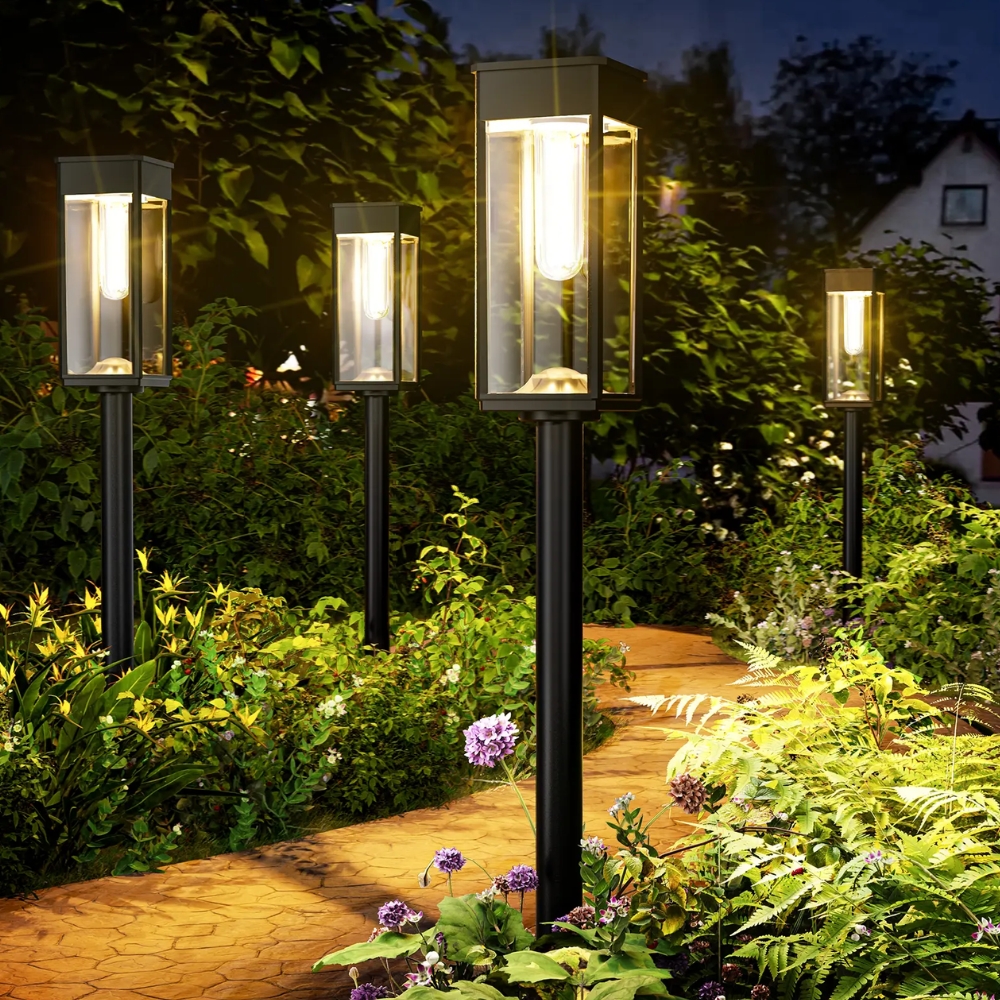
Solar Pathway Lights FAQ
 Maya ChenContributing Editor
Solar Pathway Lights: Frequently Asked Questions
Do solar pathway lights work on cloudy days?
Yes, but with less runtime. The panel still charges in overcast light — just more slowly. A quality lithium battery and a decent-sized panel bank enough on a grey day to run through the evening; cheap sets with small panels may not. [ADJUST TO REFLECT PRODUCT PERFORMANCE.]
How long do solar pathway lights stay on at night?
Photo by ROMAN ODINTSOV on Pexels
On a full charge, ours run about [RUNTIME HOURS] hours (measured outdoors, not lab-ideal). Runtime is shorter in winter due to fewer daylight hours for charging — not because of the cold itself.
Do they work in winter?
Yes, with the right setup. Cold doesn't stop solar lights — short days, low sun, and snow-covered panels do, and cheap NiMH batteries lose capacity in cold. Lithium batteries, larger panels, and brushing snow off the panels keep them running through winter. → Full guide: Best Solar Pathway Lights for Winter and Shade
Are solar pathway lights waterproof?
Ours are rated [IP RATING], sealed against rain, snow, and sprinklers. Look for at least IP65; choose IP67 for heavy-snow or heavy-rain climates. A low or unstated IP rating is a common reason cheap lights fog up and fail.
Can I replace the battery?
Photo by Jimmy Liao on Pexels
[YES/NO — CONFIRM PER PRODUCT.] Ours use a [BATTERY TYPE, e.g. standard replaceable AA-size lithium cell], so you can swap it after several years rather than replacing the whole light. Sealed units without a replaceable battery must be discarded when the battery ends — worth checking before you buy.
Why did my solar lights stop working?
In order of likelihood:
How far apart should I place them?
Generally [SPACING RANGE] apart, so the light pools just touch. Closer for accent lights and curves. → How to Space and Lay Out Pathway Lights
Do they need any maintenance?
Minimal: wipe the panel clean a few times a season, brush off snow in winter, and replace the battery after several years if needed. That's it.
Part of our Complete Guide to Solar Garden Pathway Lighting.