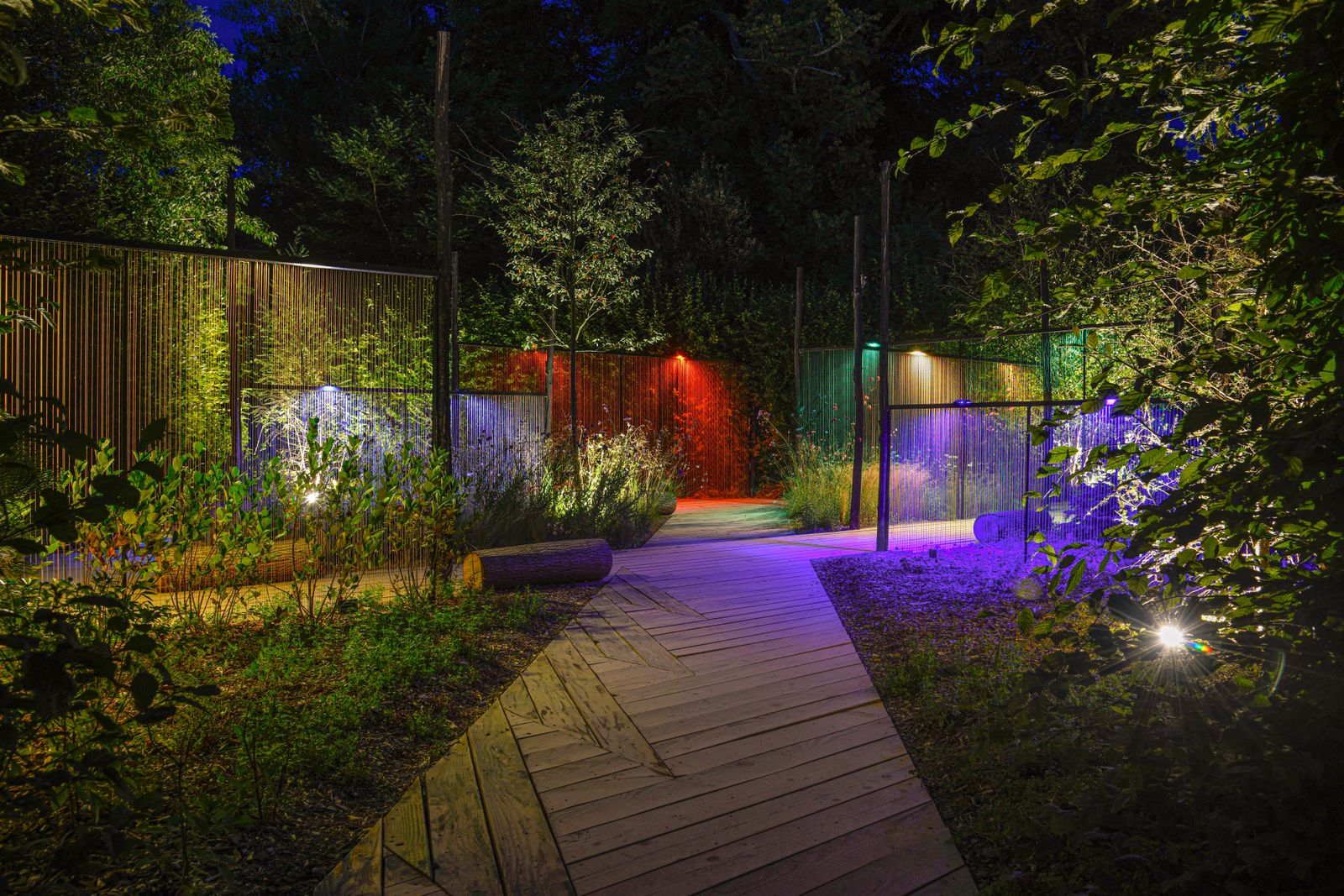
Solar Walkway Lighting for Hardscaping & Garden Beds: Design & Buyer's Guide
Lighting hardscape and garden beds is a different job from lighting a walkway. A path needs an even line of light on the walking surface, while a retaining wall, a paver patio edge, or a planting border needs light that grazes across a surface to reveal texture. Solar stake fixtures can do both, but where you place them and how many you buy changes completely depending on which job you are doing.
What hardscape lighting has to accomplish
Hardscape means the built parts of a landscape: paver walkways, patios, steps, seat walls, retaining walls, gravel beds, and edging. These surfaces are usually flat, hard, and uniform in color, which means they look dull under light aimed straight at them and interesting under light that crosses them at a shallow angle.
Three effects cover almost every hardscape situation:
- Grazing. A fixture placed close to a wall or a raised bed edge throws light along the surface, and every joint, stone face, and mortar line casts a small shadow. This is what makes stonework look like stonework at night.
- Edge definition. A fixture set just outside the paving line marks where the hard surface stops and the planting or lawn begins. This is the single most useful safety effect in a patio or a wide walkway.
- Pooling. Overlapping circles of light on a flat surface, used along a route people actually walk. This is standard pathway lighting and it belongs on the path, not on the patio.
Where to place fixtures in beds and along hardscape
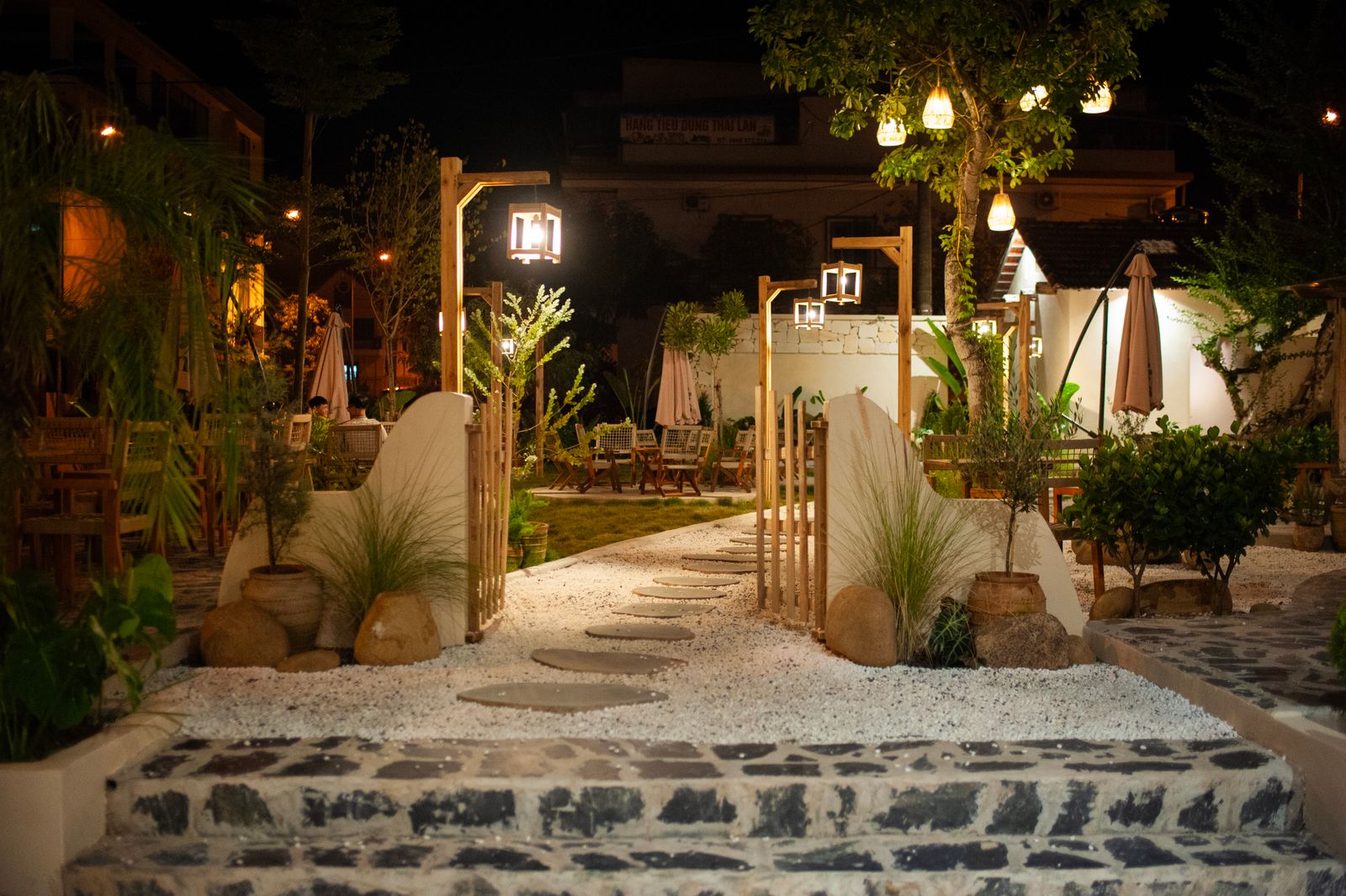
Photo by Thang Nguyen on Pexels
The placement rules differ enough by surface that it is worth treating each separately.
| Location | Fixture position | What it achieves | |---|---|---| | Paver walkway edge | Just off the paving, set back a few inches | Even pools on the walking surface | | Retaining or seat wall | Close to the base, light crossing the face | Texture and shadow on the stonework | | Raised planting bed | Front edge, aimed along the bed | Depth in the planting, defined border | | Gravel or mulch border | Inside the border, spaced widely | Warm glow without a hard line | | Steps within hardscape | One fixture per grade change, near the riser | Visible tread edges | | Patio perimeter | Corners and entry points only | Boundary without glare at seating height |
Two placement habits are worth adopting regardless of surface. Set fixtures so the light source itself is not in a seated person's line of sight, because glare at eye level undoes all the atmosphere the lighting was meant to create. And keep the fixture heads out of the mower and trimmer path, which usually means inside the bed rather than on the turf side of the edging.
For a broader set of arrangement ideas that apply to irregular yards and mixed borders, see these creative layouts for waterproof solar garden pathway lights.
What to look for when buying solar lights for beds and hardscape
Bed and hardscape installations put different demands on a fixture than an open walkway does. The buying criteria shift accordingly.
The Waterproof Solar Garden Pathway Lights with Automatic On and Off cover these requirements directly. The housing is designed to be waterproof, which suits irrigated beds and paved edges where water pools. The lights are solar powered, so nothing needs to be trenched across a finished patio or through an established bed, and there is no cable to cut during future planting work. The automatic on and off sensor handles switching without a timer, and the modern styling sits cleanly against contemporary paving and edging.
For a fuller breakdown of what separates strong solar fixtures from weak ones on panels, batteries, and run time, this high-efficiency solar pathway lights buying guide covers the technical selection criteria.
How many fixtures a hardscape project needs
Hardscape lighting uses fewer fixtures than people expect, because the surfaces themselves carry the light. Reflective paving spreads illumination that would disappear on a lawn.
A working method:
The arithmetic for walkway runs specifically, including how spacing interacts with pack sizes, is worked through in this guide on how many solar pathway lights a walkway needs.
Sun exposure is the constraint that decides the layout
Hardscape areas are frequently the sunniest part of a yard, which works in favor of solar fixtures. Garden beds are frequently the shadiest, particularly borders along a fence line or under a tree canopy.
The practical consequence: plan the bed lighting around where the sun actually falls, not around where the plants look best. A fixture positioned for a perfect grazing angle but sitting in full-day shade will underperform every night. Options include moving the fixture forward to the bed edge where it gets more sky, choosing the sunnier side of a bed for accent lighting, and accepting that a deeply shaded corner may be better left dark than lit poorly.
Fixture selection for those difficult spots is covered in this guide to the best solar pathway lights for partial-sun walkways.
Frequently asked questions
Can solar stake lights be used on a paver patio with no soil? Not directly, since a stake needs something to push into. The usual solution is to place fixtures in the planting or gravel bed immediately adjacent to the paving and let the light spill across the hard surface, which produces a better grazing effect anyway.
Should bed lighting be brighter or dimmer than path lighting? Dimmer, or at least fewer fixtures. The walking surface should be the brightest thing in the scene. Accent lighting that competes with the path makes the whole layout look busy.
How close to a wall should a fixture sit for a grazing effect? Close enough that the light travels along the face rather than at it, which in practice means within a few inches of the base. Moving the fixture farther out flattens the texture and turns grazing into a plain wash.
Do solar fixtures need to be removed before mulching? Pulling them makes the job easier and prevents mulch from banking against the housing. Fresh mulch heaped against a fixture holds moisture at the seam and can bury the panel edge, both of which are worth avoiding.
The practical next step
Walk the yard in daylight with a tape measure and write down four separate numbers: walkway length, patio perimeter, wall face length, and bed border length. Then mark which of those four people actually walk on. That single distinction between walking surfaces and accent surfaces determines how many fixtures the project needs and where they go, and it prevents the most common outcome in hardscape lighting, which is a yard with plenty of fixtures and no clear focus.
Cover photo by Thierry coulon on Pexels.