Walkway Lighting for Accessibility: Aging Eyes, Glare, and Trip Hazards
Lighting a walkway for someone with limited mobility or reduced vision is a different problem from lighting it to look attractive. An older adult's eyes need roughly two to three times more light than a young adult's to see the same detail, adapt to darkness far more slowly, and are much more sensitive to glare. That combination means the wrong lighting can genuinely make a path harder to navigate than no lighting at all.
This is a question-and-answer guide to the human factors: what changes with age and vision loss, why glare matters more than brightness, and what mobility aids need from a lit path.
What actually changes about seeing at night as people age?
Four changes matter for outdoor lighting, and they compound.
- Less light reaches the retina. The pupil admits less light and the lens transmits less of it, so the same fixture delivers less usable illumination to an eighty-year-old than to a twenty-year-old.
- Dark adaptation slows down. Moving from a bright kitchen to a dim path can take several minutes to adjust to instead of seconds. During that window, vision is very poor.
- Glare recovery slows down. After looking at a bright source, it takes noticeably longer to see detail again. This is the single most important fact for path lighting design.
- Contrast sensitivity drops. Distinguishing a step edge from the tread below it depends on contrast, and reduced contrast sensitivity means the edge has to be more clearly differentiated to register.
Why is glare worse than dim light for accessibility?
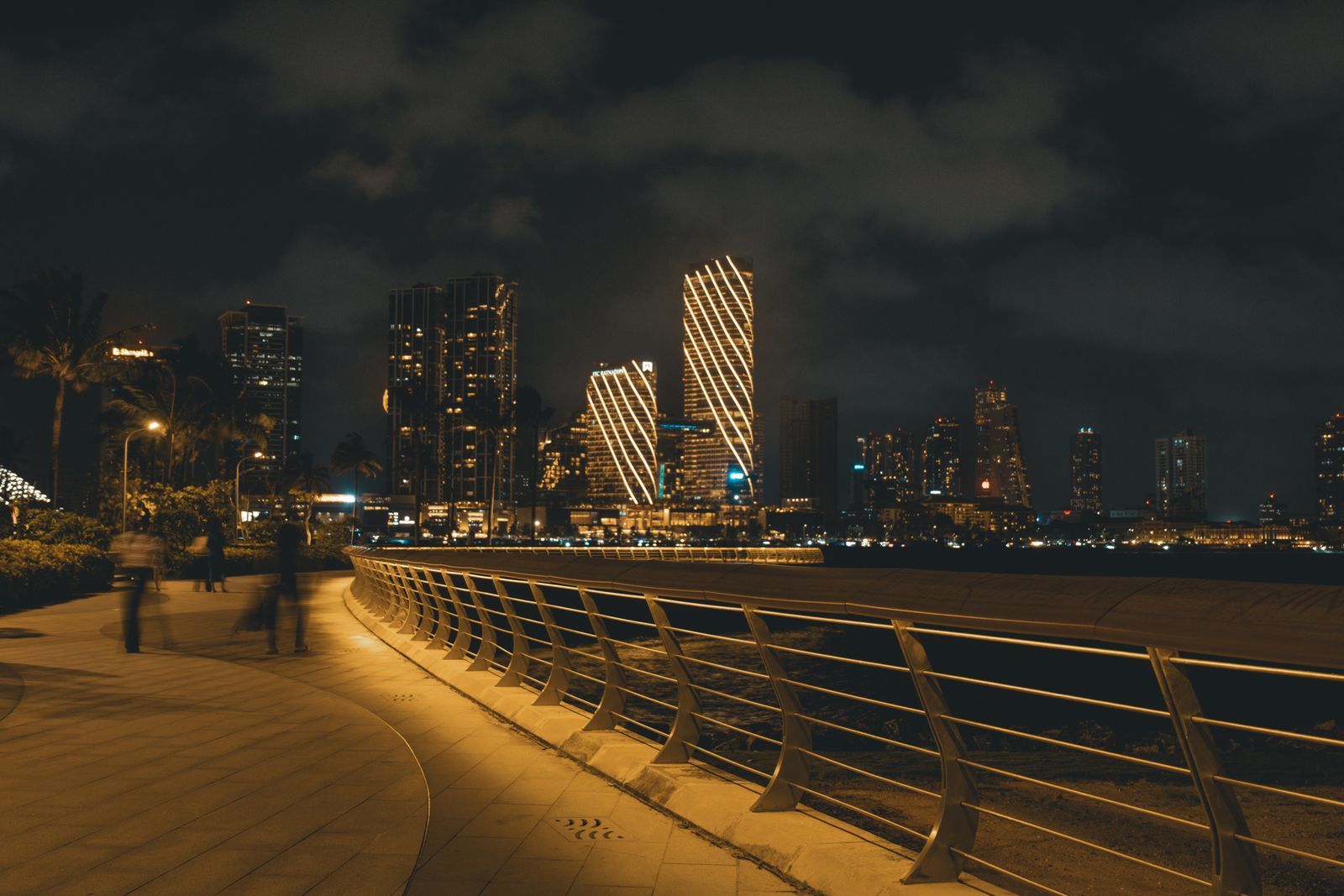
Photo by Ceylon Frames on Pexels
Because glare removes information, while dim light merely provides less of it. A bright unshielded source in the field of view scatters light inside the eye and reduces the contrast of everything else in the scene. For someone with cataracts or another age-related lens change, that scattering is dramatically worse.
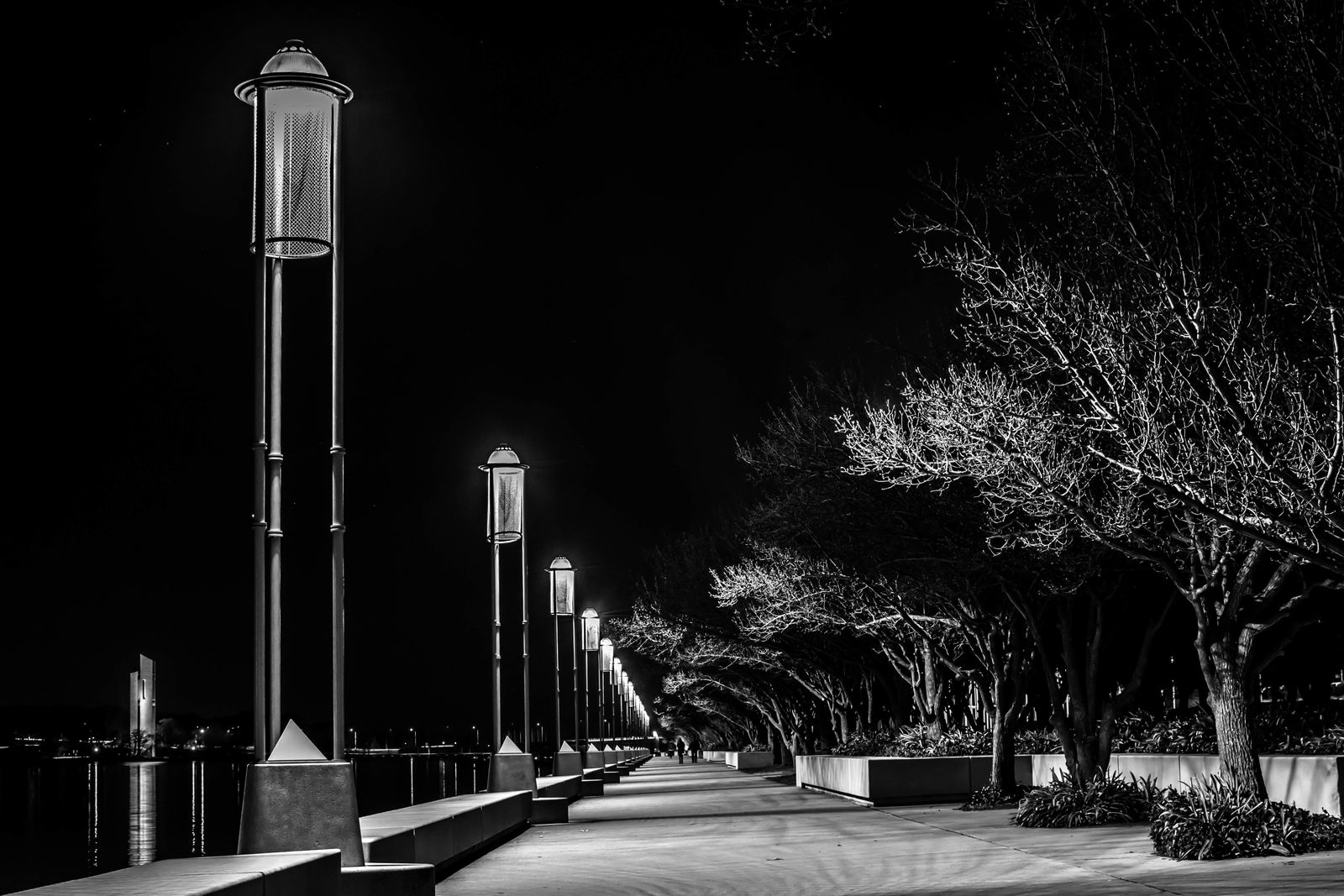
The practical result is that a path lit by a few bright, visible sources can be less navigable than the same path lit by many low, shielded ones. What you want is lit ground with no visible bulbs.
This argues strongly for low, downward-directed fixtures rather than tall or bright ones. Path-height fixtures like the Waterproof Solar Garden Pathway Lights with Automatic On and Off sit well below the sightline and put their output on the walking surface, which is exactly the geometry that avoids disability glare.
What should the light actually reveal?
Rank the targets in this order, because they are the things that cause falls.
Note that general brightness is nowhere on that list. Uniform floodlighting of a path can actually hide grade changes, because it eliminates the shadows that reveal them. Low light crossing the path from the side is better at showing a step edge than bright light from above.
What do canes, walkers, and wheelchairs need from a lit path?
Physical clearance, and light that does not create a false obstacle.
- Keep fixtures fully clear of the walking surface. A walker or wheelchair uses more width than a person on foot, and a fixture that a walking adult passes comfortably can be a snag point for a walker frame.
- Do not place fixtures where they narrow a pinch point. Gateways, the space between a car and a wall, the turn at the bottom of steps.
- Avoid strong shadow bands across the path. A hard-edged shadow across a walking surface reads as a step to someone with reduced depth perception, and people stop or step over nothing. Softer, overlapping light avoids the effect.
- Light the destination, not just the route. A door lock, a car door handle, and a gate latch are all fine-motor tasks that need light at the point of use.
- Consider cane sweep. A person using a long cane sweeps a wide arc at ground level. Fixtures set at the very edge of the path get found by the cane, which is not dangerous but is a nuisance, and set back a few inches they are not.
Design choices compared
| Choice | Better for accessibility | Why | |---|---|---| | Many low fixtures vs. a few bright ones | Many low | Avoids glare; more even ground illumination | | Light aimed down vs. aimed along the path | Down | Keeps sources out of the sightline | | Warm tone vs. cool blue-heavy | Warm | Perceived as less harsh; less discomfort glare | | Fixtures at path edge vs. set back a few inches | Set back | Clears mobility aids and cane sweep | | Even light vs. strongly patterned light | Even | Hard shadows mimic steps | | Light at steps vs. light along straight runs | At steps | Steps are where falls happen |
Does the transition from indoors to outdoors matter?
More than most people realize. Someone stepping from a lit hallway onto a dim porch is temporarily near-blind while their eyes adapt, and that is precisely the moment they are negotiating a threshold and a step.
The fix is a graded transition rather than a hard edge. Light the porch and the first few feet of path reasonably well, then let the level step down along the run. In practice that means concentrating fixtures near the door and spacing them more generously farther out, which is the opposite of the uniform run people usually install.
The reverse trip matters too. Coming in from a dark yard toward a bright door light, that door light is a glare source aimed straight at the person's eyes while they climb the steps. A shielded entry fixture, or one aimed down rather than out, solves it.
Does seasonal darkness change the requirements?
Yes, and it is worth planning for the worst case rather than the average. In winter, the walk from the car happens in full darkness at an hour that is early evening in summer, so the path gets far more use after dark. Snow and ice also change the surface, add a slip hazard, and reflect light differently than bare pavement.
For a household where accessibility is the priority, plan the lighting around the darkest, longest nights of the year. Our notes on pathway light output in winter conditions cover what to expect from solar fixtures in that part of the year.
FAQ
Is brighter always better for an older adult's walkway? No. More light helps up to a point, but brighter fixtures that are visible from the walking position create glare, and glare costs more visual information than the extra light provides. More low fixtures beats fewer bright ones almost every time.
What is the most important place to add light on an existing path? The steps and any grade change, followed by the threshold at the door. Falls cluster at height changes, so a single fixture that clearly reveals a step edge does more good than five along a flat straight run.
Should the light be motion-activated to save energy? Generally not where accessibility is the concern. A motion light means walking into darkness before it triggers, and the sudden change from dark to bright is itself a glare and adaptation problem. Steady dusk-to-dawn lighting is easier on aging eyes because the eye stays adapted to one condition.
Are there standards I should be following? There are published recommendations for exterior walkway illumination and slip-resistant surfaces, and accessibility guidelines for path width and step geometry, though most apply to commercial rather than residential properties. They are useful as a sanity check on your own layout. Our overview of weatherproof walkway lighting standards covers the fixture side, and the visual result is discussed in positioning path lights well.
A practical next step
Walk the path after dark with the person it is for, slowly, and stop at every point where they hesitate, reach for something, or look down. Those hesitations locate the hazards more accurately than any measurement, and in most homes there turn out to be only three or four of them. Light those first.
Cover photo by Warren Griffiths on Pexels.