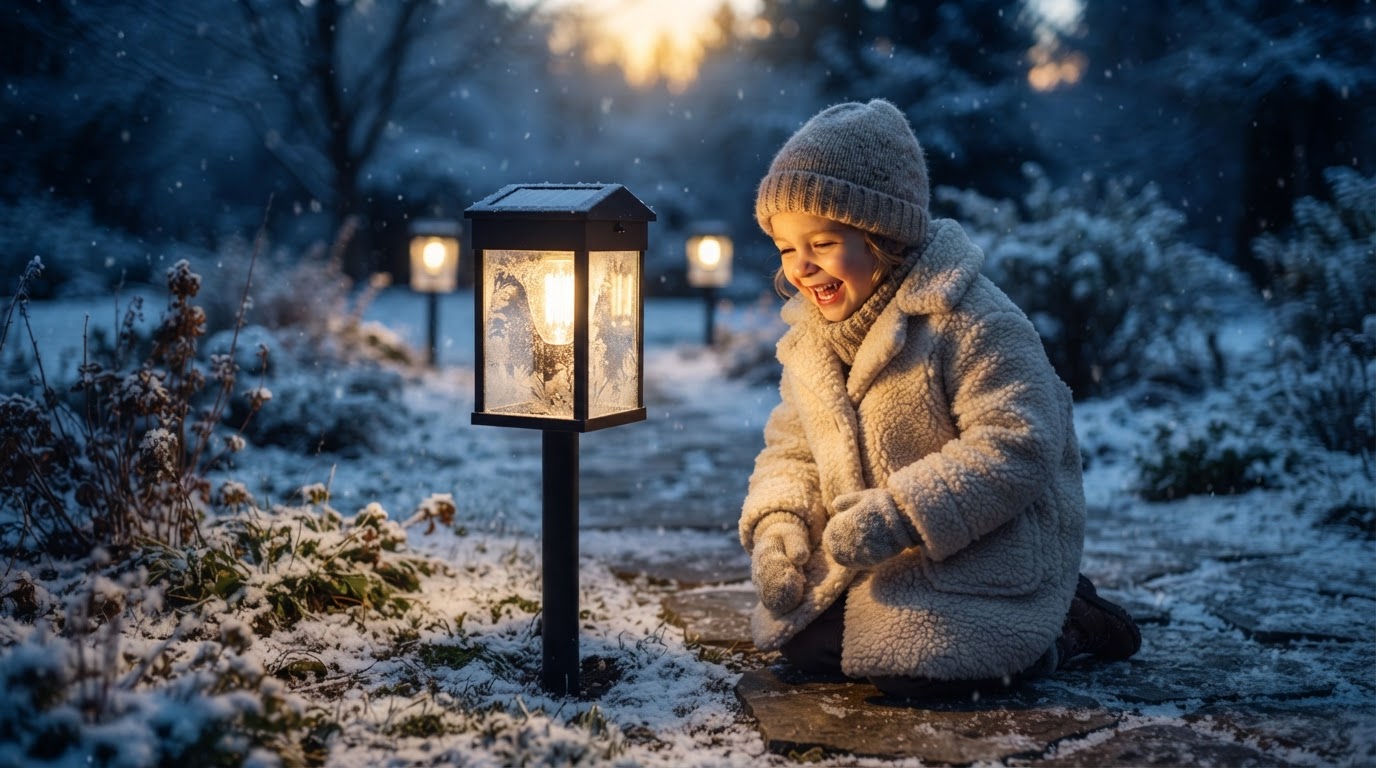
How do Garden Pathway Lights handle winter weather?
 Jordan HaleStaff Writer
November 3, 2026 — Garden Pathway Lights maintain functionality in winter through a combination of IP65-rated housing and high-capacity lithium batteries, provided the solar panels remain clear of debris.
I remember the first time I watched a heavy November sleet turn into a thick, wet blanket of snow over my yard. The air was sharp enough to sting, and the silence that follows a heavy snowfall felt absolute as I looked out at the glowing markers lining the walk. For homeowners in northern climates, the transition to winter isn't just about the cold; it is about the significant drop in daylight hours and the physical toll that freeze-thaw cycles take on outdoor hardware. Choosing the right equipment ensures these luminous guides don't flicker out when the sun starts setting at 4:30 PM.
Can solar lights survive freezing temperatures and snow?
It turns out that most high-quality solar fixtures are engineered specifically to endure sub-zero temperatures and moisture ingress. The first thing I noticed was how the seals on my lights remained pliable even when the ground turned to iron. According to technical documentation from Streetlights Solar, most modern solar units are designed to be weather-resistant and can withstand rain, snow, and freezing conditions without internal component failure. The key is the IP (Ingress Protection) rating; a rating of IP65 is the standard for units like the Jackyled flood light, which Forbes Vetted identifies as being capable of surviving both extreme high and low temperatures while resisting wind-driven snow. While the light itself is durable, the physical weight of snow on the panel is the primary obstacle. I make a habit of brushing off the glass faces after every storm to ensure the photovoltaic cells can still catch the weak winter sun.
How do you maintain light duration during shorter winter days?
Maximizing the runtime of Garden Pathway Lights during the winter requires optimizing the limited charge window and ensuring the battery chemistry is robust enough for the cold. Somewhere around week two of December, I realized that the angle of the sun had shifted so significantly that my lights were only getting four hours of direct exposure. Experts contributing to Quora's knowledge base on solar lighting suggest that units equipped with larger batteries and expanded solar panel surface areas perform significantly better during the winter months. Because cold temperatures can reduce the efficiency of standard NiMH batteries, I prefer fixtures using Lithium-Ion or LiFePO4 technology, which handle thermal fluctuations with less capacity loss. Beyond battery type, keeping the panels free of salt spray and grime is essential, as even a thin film of winter road salt can reduce charging efficiency by over 30%. This maintenance ensures the automatic sensors continue to trigger the "dusk to dawn" function reliably despite the overcast skies.
Quick answers
Q: What is the best waterproof rating for winter solar lights? A: An IP65 rating is the ideal standard for winter, as it indicates the unit is dust-tight and protected against water jets, which includes heavy sleet and driving snow. Products like the Linkind SolarDot™ utilize this rating to provide durability against frost and extreme cold.
Q: Do solar lights charge on cloudy winter days? A: Yes, solar panels can still harvest energy on overcast days, though the output is typically reduced to about 10% to 25% of their full capacity. To compensate, ensure you are using weatherproof solar walkway lights with high-efficiency monocrystalline panels.
Q: Should I bring my garden lights inside for the winter? A: If your lights are rated IP65 or higher, they can remain outside year-round; however, if you live in a region with consistent temperatures below -4°F, you might consider storing them to preserve battery longevity. For those in milder but wet climates, rainy climate solar pathway lights are designed to stay installed through the season.
Q: How do I prevent my lights from being buried in snow? A: Choosing fixtures with a taller stake height, often found in waterproof solar pathway lights, helps keep the solar panel above the typical accumulation level. If the snow exceeds 6 inches, manual clearing is necessary to allow the sensors to function.
Learn more about Garden Pathway Lights at https://gardenpathwaylights.com.
Sources
- Solar Lights in Winter: The Ultimate Guide to Protecting Your Solar Lights
- Outdoor Solar Lights That Work in Winter | Linkind SolarDot™
- Best Outdoor Solar Lights 2026 - Forbes Vetted