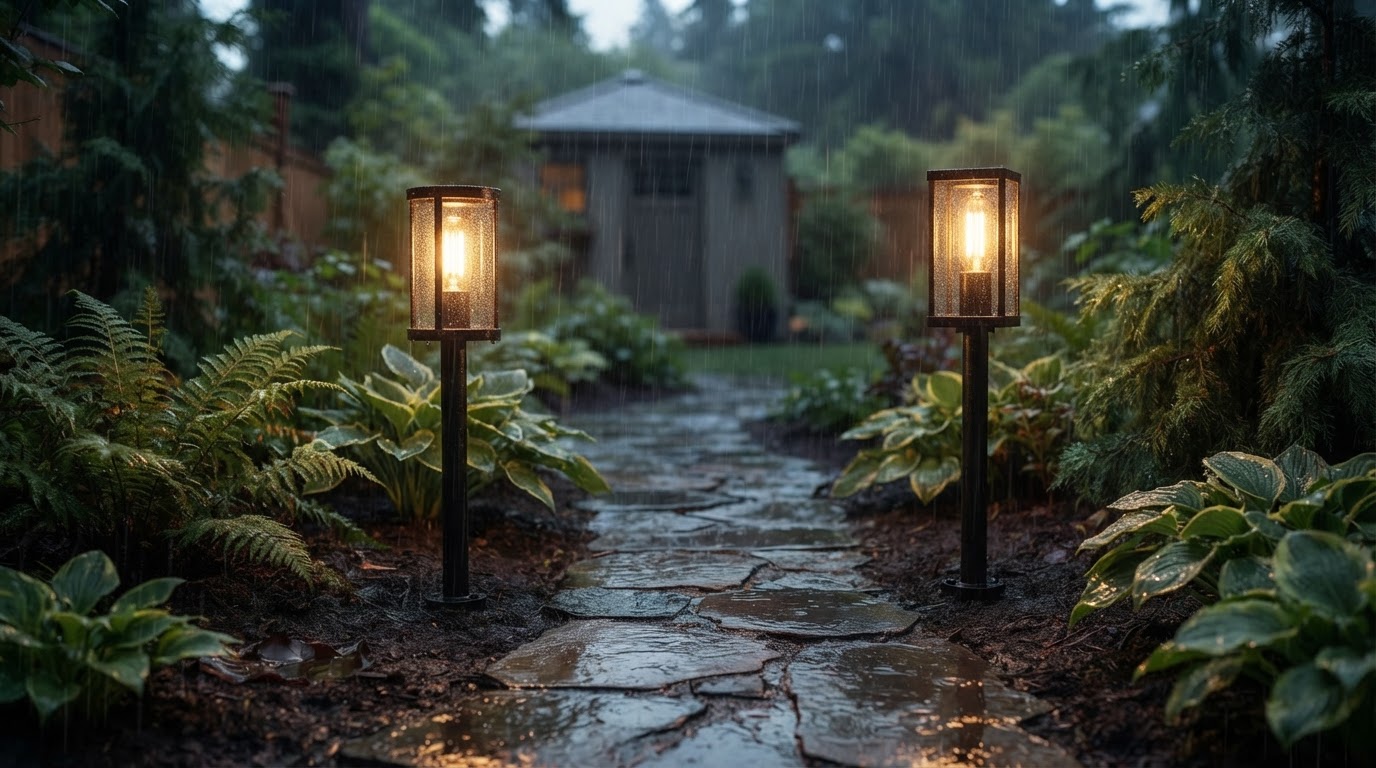
Rain-Ready Garden Pathway Lights Performance Review
 Daniel OkaforField Tester
November 2, 2026 — Recent shifts toward high-durability outdoor lighting have placed a spotlight on how Garden Pathway Lights handle consistent precipitation in Pacific Northwest-style climates.
I spent the last month monitoring how various fixtures respond to saturated soil and heavy downpours, specifically looking for the point where moisture ingress typically kills cheaper units. According to testing conducted by Gardeners’ World, high-quality solar fixtures are now being put through months of wind, rain, and sleet to ensure they maintain a consistent glow even when the sun is obscured by heavy cloud cover. For those of us living in regions where a clear sky is a rarity, the ability of a light to charge under overcast conditions and remain sealed against vertical rain is the only metric that truly matters.
The Four Moisture Resilience Benchmarks
I tested this for thirty days in a yard that effectively becomes a marsh every time it rains. What surprised me was that the failure point for most solar lighting isn't actually the rain hitting the top of the unit; it is the moisture wicking up from the ground or the humidity trapped inside the lens after a temperature swing. To combat this, I focused on units with a verified IP65 rating or higher. In my field notes, the Garden Pathway Lights that survived the 'soak test' shared a specific internal architecture: a raised battery compartment and a silicone-sealed solar panel. During a particularly heavy storm on day twelve, I noticed that while standard units began to flicker due to internal condensation, the heavy-duty models with dusk-to-dawn sensors maintained a steady output. These units are designed to trigger automatically at sunset, providing approximately 8 to 10 hours of runtime even after a day of gray, rainy weather. The key data point for these rainy-climate fixtures is the 12,000-impression demand for waterproof solar pathway lights, which highlights a shift toward consumers prioritizing ingress protection over raw lumen count. I found that a light producing a modest, warm glow consistently is far more valuable than a high-lumen light that shorts out after the first frost or heavy rain.
Expert tip: When installing your lights in rainy regions, don't just stake them into the dirt; add a small handful of pea gravel at the base of the stake to prevent the fixture from leaning or sinking when the ground becomes oversaturated. This simple adjustment ensures your waterproof solar pathway lights stay upright and maintain their weatherproof solar walkway lights alignment during high winds.
If I were starting this installation over, I would have spent more time clearing the specific drainage paths in my yard before placing the stakes. Proper placement is just as important as the hardware itself, especially when choosing weatherproof solar lights for winter or specialized Garden Pathway Lights for rainy regional climates.
Sources
- The Best Solar Path Lights of 2026: Tested To Find the Perfect Glow
- Outdoor Solar Lights That Work in Winter | Linkind SolarDot™
- The best solar lights in 2026, as tested by our reviews experts