How Many Solar Pathway Lights Do I Need? Pack Size Calculation Guide
The number of solar pathway lights a walkway needs comes from one piece of arithmetic: measured path length divided by chosen spacing interval, plus one fixture for the start of the run and one extra for every step or grade change. Everything else in the decision is about rounding that answer up or down to the multi-pack sizes actually available. This guide is the calculation itself, worked in order, with the adjustments that change the result.
The core calculation
Write down four numbers before opening a product page.
The formula: fixtures = (L divided by S, rounded up, plus 1) multiplied by N, plus P.
The "plus 1" exists because dividing a length by an interval gives the number of gaps, not the number of markers. A 40-foot path at 8-foot spacing has five gaps and six positions.
Picking the spacing interval
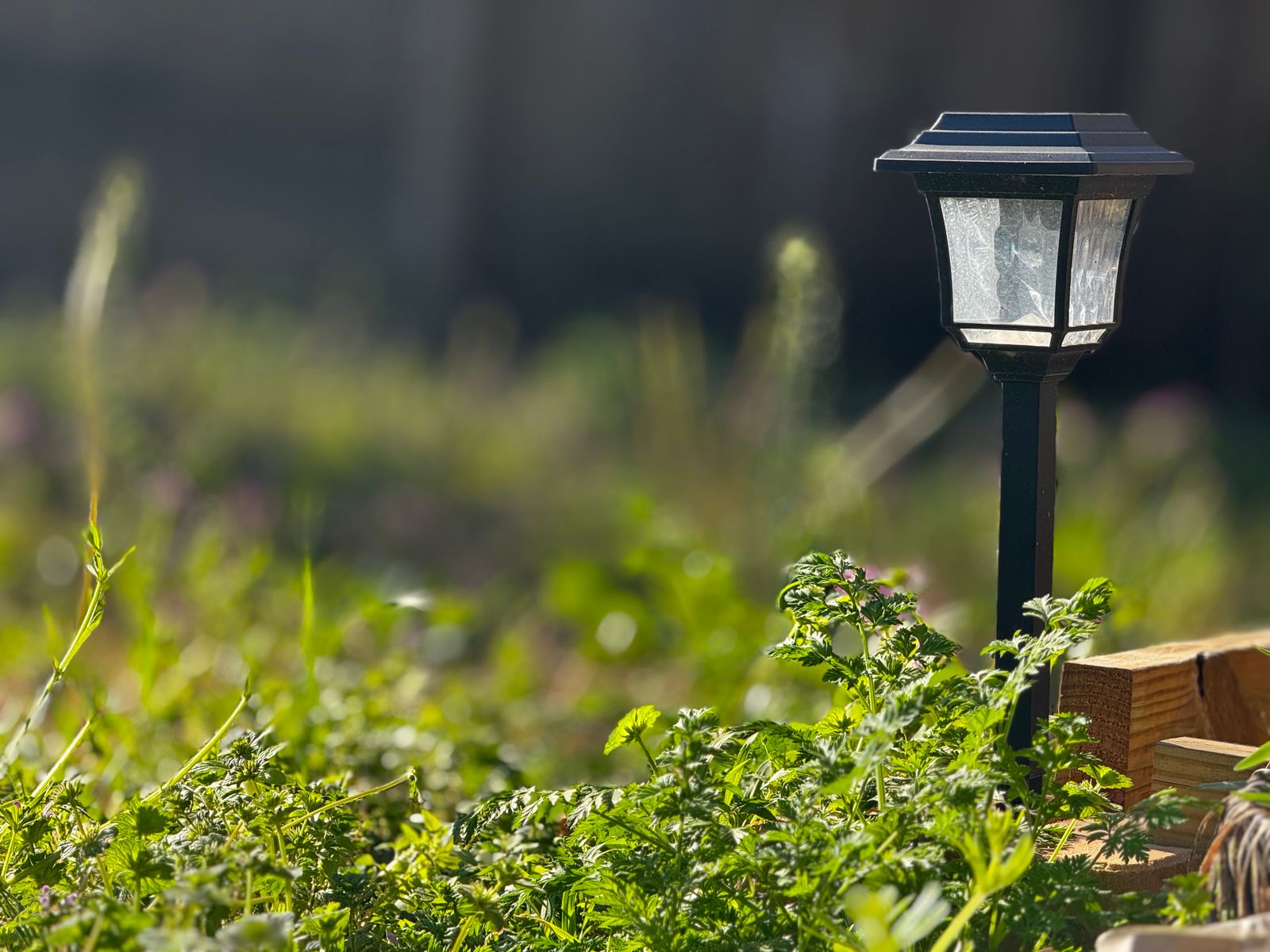
Spacing is where the whole calculation is decided, and it is worth thinking about in terms of what the light is for rather than a rule of thumb.
| Spacing style | Typical interval | Best for | Trade-off | |---|---|---|---| | Continuous | Short intervals, pools overlapping | Steps, uneven paving, primary entry route | Highest fixture count | | Standard | Moderate intervals, pools nearly touching | Most front walkways | Balanced cost and coverage | | Accent | Wide intervals, distinct pools | Long garden paths, side yards | Dark gaps between fixtures | | Marker | Very wide, one per feature | Driveway edges, bed corners | Guidance only, not illumination |
A useful check: decide whether a visitor needs to see the surface continuously or simply needs to know where the path goes. Continuous vision requires overlapping light. Wayfinding does not.
The visual consequences of tight versus wide spacing, and whether to alternate sides, are covered in this comparison of staggered and straight pathway lighting layouts.
Four worked examples
These use the formula directly so the arithmetic is visible.
A short front walkway, 24 feet, standard spacing of 6 feet, one side, no steps. 24 divided by 6 is 4, plus 1 is 5 positions. One side, no special positions. Five fixtures.
A front walkway with steps, 30 feet, standard spacing of 6 feet, one side, three risers at the porch. 30 divided by 6 is 5, plus 1 is 6. Add two fixtures for the step transition, since one at the bottom and one at the top is the practical minimum. Eight fixtures.
A driveway edge, 60 feet, accent spacing of 12 feet, one side, no steps. 60 divided by 12 is 5, plus 1 is 6. Six fixtures.
A garden path lit from both sides, 36 feet, standard spacing of 9 feet, no steps. 36 divided by 9 is 4, plus 1 is 5, multiplied by 2 sides is 10. Ten fixtures.
Notice how much more the side count changes the answer than the spacing does. Deciding one side versus two is the biggest single lever on total quantity.
Adjustments that change the answer
The raw formula gives a starting number. Five conditions justify moving off it.
- Shade. A fixture under a tree canopy or on the north side of a fence charges less than one in the open. Shaded stretches are better served by moving fixtures into sun than by adding more in the shade. Fixture choice for these areas is covered in this guide to solar pathway lights for partial-sun walkways.
- Surface color. Light-colored concrete and pale pavers reflect light and effectively extend each fixture's reach. Dark stone, brick, and bark mulch absorb it, which argues for tighter spacing.
- Curves. A curved path needs fixtures measured along the arc, not across the chord, and needs an extra fixture at the apex of each bend so the turn is visible before a walker reaches it.
- Competing light. A walkway already lit by a porch fixture or a streetlight needs fewer path lights near that source and more at the dark end.
- Layered plans. If some fixtures will be used as bed accents rather than path markers, count those separately. Accent positions do not contribute to walking-surface coverage.
How to round to available pack sizes
Photo by Baran Robin on Pexels
Solar pathway lights are generally sold in multi-packs rather than as single fixtures, so the final purchase quantity is a rounding decision.
For the wider walkway planning context around pack buying, including how layout choices interact with quantity, see this companion guide on how many solar pathway lights a walkway needs.
Why the fixture type affects the count
A self-contained solar fixture changes the economics of getting the count wrong. With a wired system, adding a light later means opening the trench and adding a splice. With standalone solar fixtures, adding or moving a light is a matter of pulling a stake and pushing it in somewhere else.
The Waterproof Solar Garden Pathway Lights with Automatic On and Off suit this iterative approach. Each fixture is independent and solar powered, so quantity can be adjusted after seeing the first layout at night. The waterproof housing means fixtures can be repositioned in wet conditions without concern, and the automatic on and off sensor means every added fixture starts working the same evening with nothing to configure.
Frequently asked questions
Is it better to buy more fixtures and space them widely, or fewer and space them tightly? Buy for the interval that suits the job, then round up to the nearest pack. Widely spaced fixtures on a primary entry walkway leave dark patches on the walking surface, while tightly spaced fixtures on a long garden path look overdone. The path's function decides, not the pack size.
Should fixtures on a curved path be spaced by the same interval as a straight one? Measure along the curve rather than in a straight line, which yields a slightly higher count for the same visual distance. Then add one fixture at each bend so the change in direction is lit before a walker reaches it.
How does spacing change for a path with steps? Steps get dedicated fixtures outside the spacing math. A grade change is the highest-risk point on any walkway, and one fixture at the bottom plus one at the top is a sensible minimum.
Does lighting both sides of a path double the fixture count? Effectively yes, and it is rarely necessary. Two-sided lighting suits wide walkways and formal front entries. On a standard three-to-four-foot path, one side with even spacing looks better and costs half as much.
The practical next step
Take a tape measure to the walkway tonight and write down three figures: total length, number of steps or grade changes, and how many sides you intend to light. Run those through the formula, add two spares, then round up to the nearest available pack. That single measurement session prevents the two most common outcomes, which are a path that runs out of light halfway along and a box of unused fixtures in the garage.
Cover photo by Nuno Magalhães on Pexels.