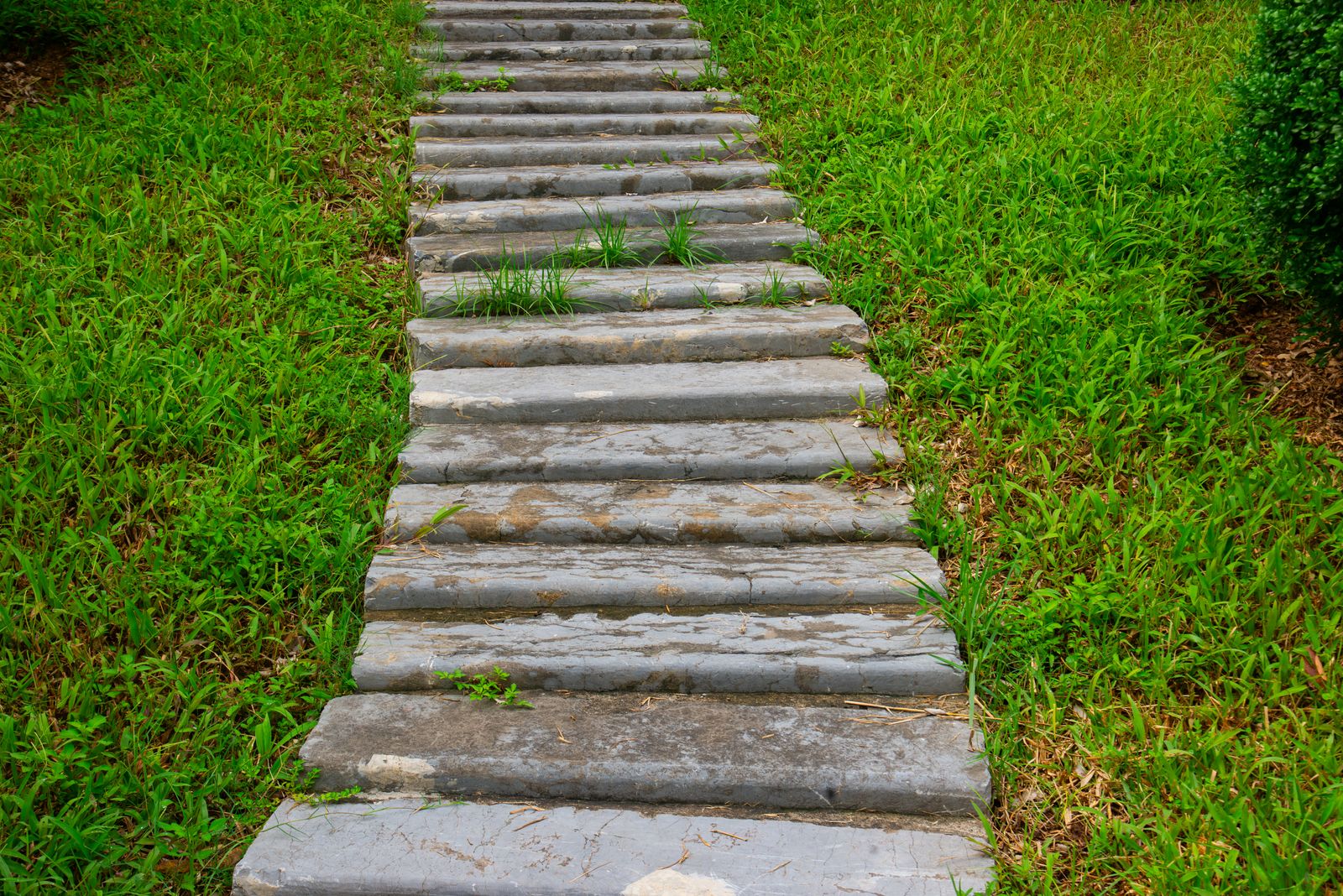
Will Your Path Lights Bother the Neighbors? Light Trespass FAQ
Low, downward-facing path lights are among the least likely outdoor fixtures to annoy a neighbor. The complaints that reach a neighbor's bedroom window almost always come from bright, upward or outward aimed sources — floodlights, wall packs, and uplights on trees. Path lighting sits at ankle height, points at the ground, and is invisible from most windows. That said, there are a few placements that do cause friction, and it is worth knowing them before you install.
This is a straight question-and-answer guide to keeping a lit walkway on your side of the property line.
What is light trespass, exactly?
Light trespass is artificial light falling on a property where it is neither wanted nor useful. It is a separate concept from skyglow, which is light escaping upward and washing out the night sky, and from glare, which is discomfort from looking at a bright source directly.
For a homeowner adding path lighting, the practical version is simpler: does your light land in someone else's yard, and can they see the source from a window they sleep near? If the answer to both is no, you are almost certainly fine.
Path-level fixtures score well on all three measures. A fixture like the Waterproof Solar Garden Pathway Lights with Automatic On and Off directs its output down onto the walkway rather than out at the yard, which keeps the light where it does work and out of places it does not.
Which outdoor lights actually generate neighbor complaints?
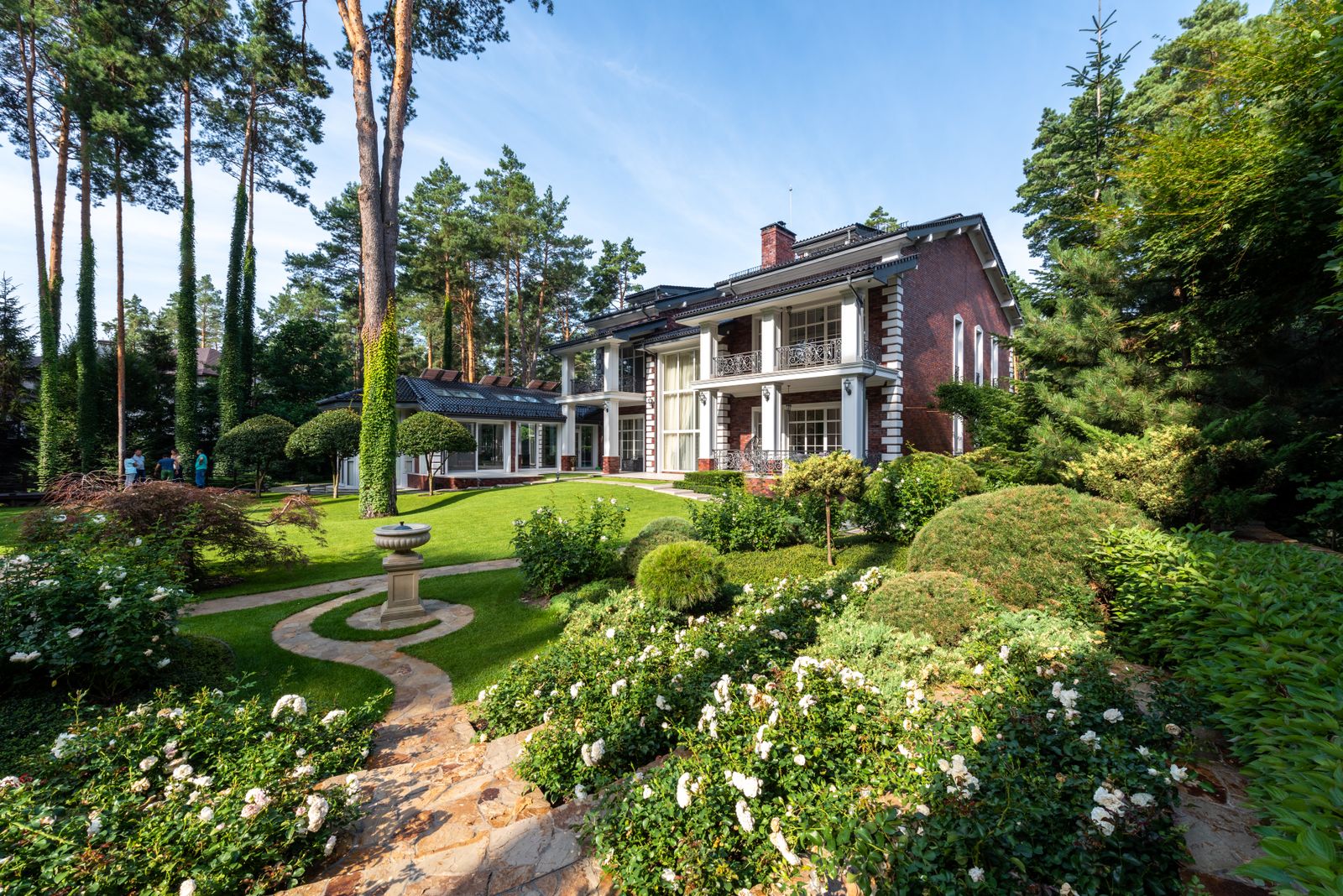
Photo by Max Vakhtbovych on Pexels
Ranked roughly by how often they cause a problem:
The pattern is height, aim, and output. Path lights are low, aimed down, and modest, which is why they rarely appear on this list at all.
How far from the property line should path lights go?
There is no universal number, and local rules vary, but a workable guideline is to keep the lighting line at least three to five feet inside your boundary, and to place the fixtures so light falls toward your own path rather than across it.
More useful than a distance is a test. Walk into your neighbor's likely vantage point — the sidewalk in front of their house, the edge of their driveway, their side yard if you can see it from a shared area — and look back. If you can see the bulb rather than just the lit path, the fixture is either too tall, too far forward, or angled outward. Moving it a foot usually resolves it.
The five-minute courtesy check
Can a neighbor make me remove my path lights?
Rarely, but the possibilities depend on where you live.
- Local lighting ordinances. Many municipalities have outdoor lighting rules, usually focused on brightness, shielding, and how much light crosses a property line. Path-level lighting almost never triggers them.
- HOA covenants. More restrictive and more common as a real constraint. Some communities specify fixture height, light color, or hours of operation. Check the covenants before installing a long run.
- Nuisance claims. Legally possible, practically almost unheard of for path lighting. These cases involve bright, persistent light entering a residence.
- Coastal and wildlife ordinances. In some sea turtle nesting areas and near protected habitats, there are genuine seasonal restrictions on any visible outdoor light. These are worth taking seriously where they apply.
Fixture choices ranked by neighbor impact
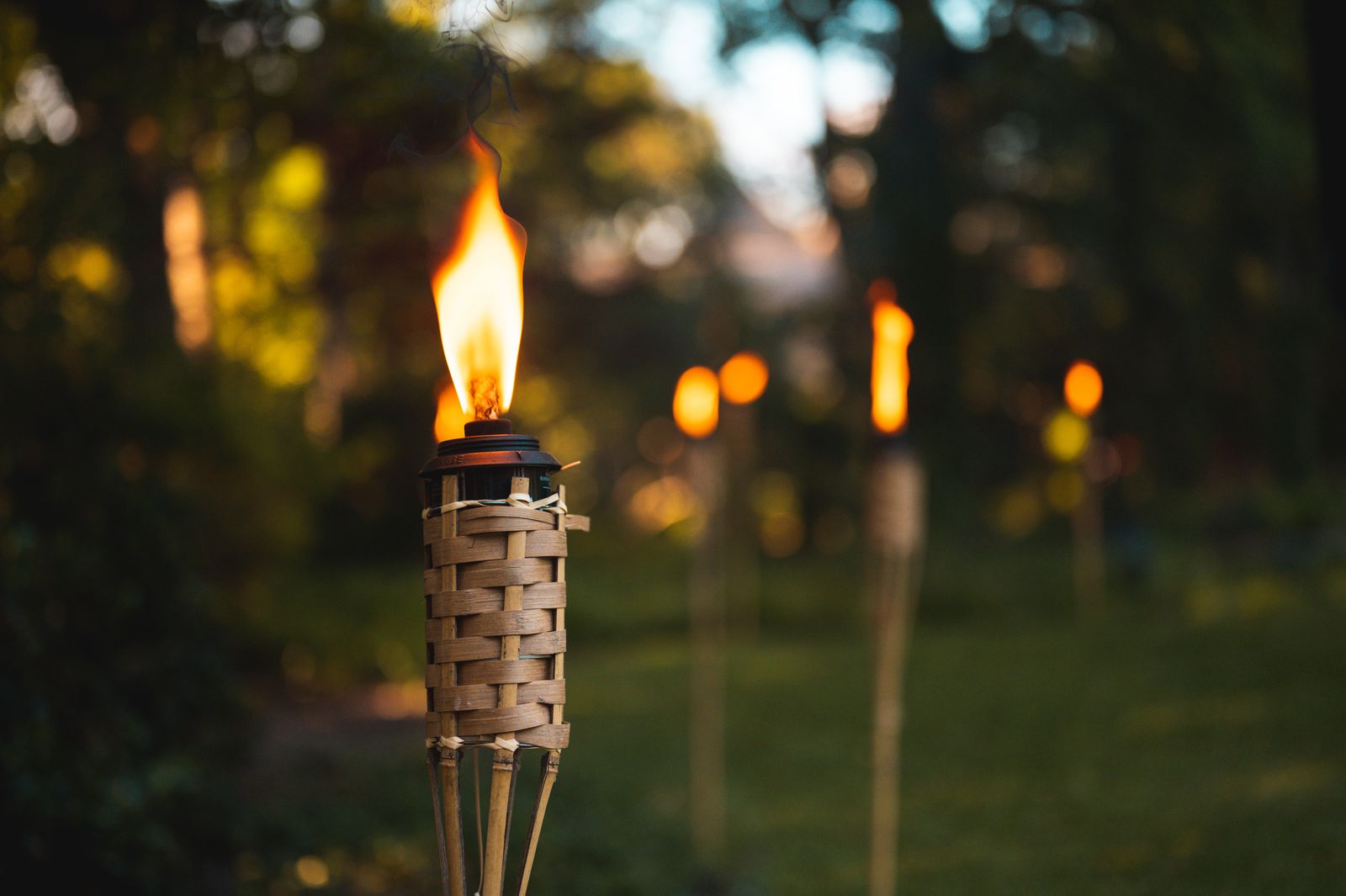
Photo by Alfo Medeiros on Pexels
| Fixture type | Height | Aim | Neighbor impact | Best use | |---|---|---|---|---| | Staked path light | Ankle to knee | Down | Very low | Walkways, garden paths, driveway edges | | Step light | Below knee | Down and forward | Very low | Stairs and grade changes | | Bollard | Waist | Down, shielded | Low | Wide paths, driveways | | Wall sconce, shielded | Head height | Down | Low to moderate | Doors and entries | | Motion floodlight | Above head | Outward | High | Targeted security only, aimed carefully | | Tree uplight | Ground | Up | Moderate to high | Occasional accent, on a timer |
If you are adding lighting in a tight lot with close neighbors, the top three rows of that table will do almost everything you need.
Does automatic dusk-to-dawn operation make things worse?
It cuts both ways, and on balance it helps. A fixture that switches itself on at dusk and off at dawn never gets left on during the day and never gets forgotten. Compared with a motion light that fires at three in the morning every time a cat crosses the yard, steady low-level light is far less disruptive — predictable light is easier for a neighbor to ignore than intermittent light.
The one thing to be aware of is duration. A dusk-to-dawn fixture is on all night by design. If a neighbor's specific objection is light at two in the morning, the answer is to move or shield the fixture rather than to look for a switch, since automatic operation is driven by the fixture's own light sensor. The behavior of that sensor is covered in our automatic dusk-to-dawn lighting FAQ.
FAQ
My neighbor complained about my new path lights. What should I check first? Reflection, then position. Ask which window or which part of their yard is affected, then stand there after dark and look. In most cases one or two fixtures near the boundary are the culprits, or light is bouncing off a pale wall or fence. Relocating a couple of fixtures three feet inward usually ends it.
Are warmer or cooler light tones better for neighbor relations? Warmer tones are consistently perceived as less intrusive at the same output, and they are also less attractive to insects and less disruptive to wildlife. Cool, blue-heavy light reads as harsh and institutional, which is part of why security floodlights generate so many complaints.
Do I need to turn my path lights off at a certain hour? Not typically, unless an HOA covenant or a local ordinance says so, or you are in a protected wildlife area with seasonal restrictions. Path-level lighting that stays inside your own boundary is generally uncontroversial through the night.
Will lighting my path make my house more visible to my neighbors in a bad way? It makes the path visible, not the house. A well-placed run reads as a defined edge from the street and improves how the property looks after dark, which is normally a benefit to both sides. Our notes on positioning path lights for curb appeal cover how to get that effect deliberately.
A practical next step
After you install, do one walk around the outside of your own property line at night and look inward. Anywhere you can see a bare light source instead of a lit path, move that fixture a foot back or turn it slightly. Ten minutes of that check prevents the only kind of complaint path lighting realistically generates.
Cover photo by The Hung on Pexels.